1 Ton Harrington Chain Hoist: Manual or Electric? A Cost-Based Decision Guide
2026-08-14 by Maren Jorgensen
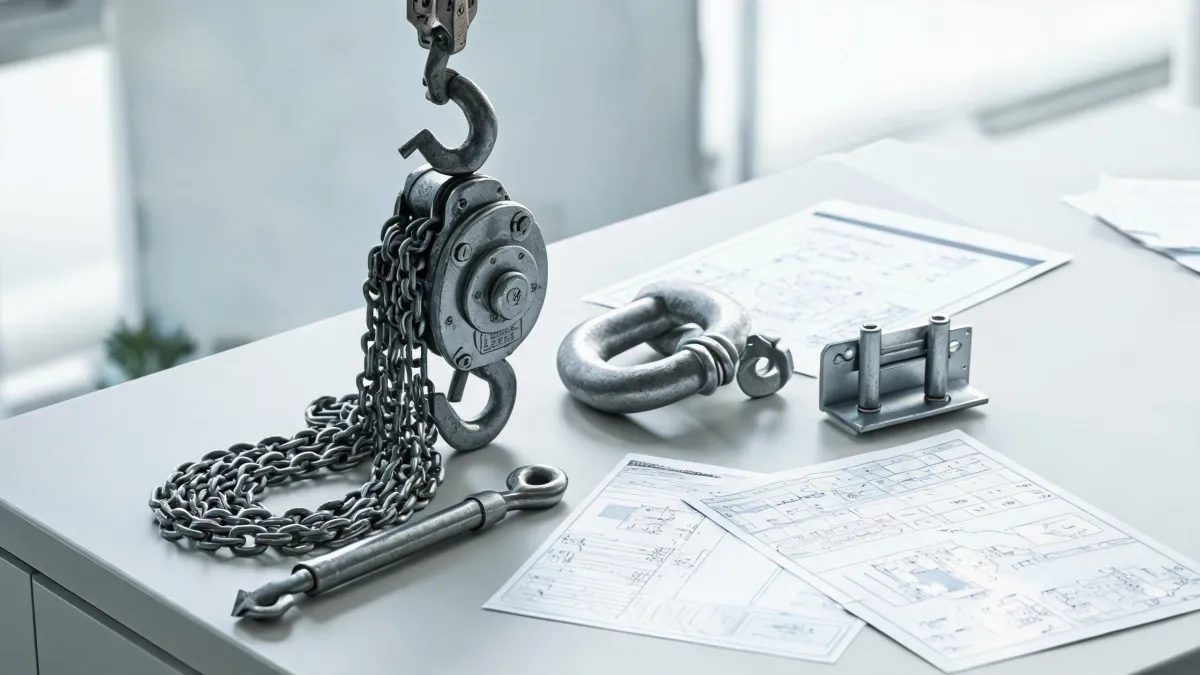
Over the past six years, as a procurement manager at a mid-sized industrial distributor, I've tracked roughly $180,000 in annual spend across lifting equipment, hand tools, and maintenance supplies—and compared pricing across dozens of suppliers in the process. When customers ask which hoist they should buy, my first answer is usually unsatisfying: "It depends."
I'm not dodging the question. There honestly isn't one best 1 ton Harrington chain hoist configuration. But there is a best one for your specific operation, and once you understand the cost math behind each scenario, the choice becomes straightforward.
First, Look at Total Cost — Not the Sticker Price
The purchase price is maybe a third of what a hoist really costs your business.
When I audit equipment purchases, I track five categories:
- Purchase price — what you pay at checkout
- Installation — electrical work for electric units, mounting hardware, load testing
- Operation — labor cost of each lift, operator training
- Maintenance — chain lubrication, brake inspection, parts
- Downtime risk — what it costs if the hoist fails mid-job
People forget that last one. A $250 manual hoist that fails while lifting a $4,000 motor is not a $250 problem. It's a $4,250 problem (plus the lost production while everything sits suspended).
The "manual hoists are always cheaper" thinking comes from an era when electric hoists cost twice as much and their duty cycles were limited. That's changed. Modern electric chain hoists are built for continuous operation, and prices have come down.
Quick reference: for a 1-ton configuration, publicly listed prices in January 2025 (verify current rates) put manual chain hoists at roughly $150–400 and basic electric chain hoists at roughly $550–1,500, depending on lift height and duty cycle.
Also, don't assume the price difference is just "brand tax." People tend to think expensive hoists cost more because of a big name. The reality runs the other direction: the name exists because the manufacturer invested in ASME B30.16-compliant load testing, engineering support, and available replacement parts. Those are what justify the price—and what keep a load from landing on someone's head.
Scenario A: Occasional Maintenance and Light-Duty Use
If your crew grabs a hoist once or twice a week, you're in the sweet spot for a manual 1 ton Harrington chain hoist.
I've watched a contractor who does chimney repair in Harrington Park, NJ, run his masonry business with a manual 1-ton unit in his truck. He lifts brick, mortar, and tools to rooftops with it. No power source needed, no extension cord, no asking the homeowner where the breaker panel is. He hooks it to a beam or a tripod and starts working.
For this frequency of use, the math is simple:
- Upfront cost: $300–400 for a quality manual unit
- Installation: none (just verify the mounting point is rated for the load)
- Maintenance: annual chain lubrication and hook inspection, maybe $20–50 per year
- Labor: 5–10 minutes per lift is acceptable when you're not doing it all day
An electric unit doesn't make sense here. The wiring requirement alone—running a drop, adding a disconnect switch—costs more than the savings you'd get from faster lifting.
Verdict: Manual. Not because it's "good enough," but because it's the actual TCO winner.
Scenario B: Daily Production and Continuous Duty
Now flip the scenario. You're running a shop floor where the hoist gets used every 20–30 minutes to position parts, move dies, or stage material. This is where buying a manual hoist to "save money" is one of the most expensive decisions you can make.
Here's a comparison I ran in Q2 2024 for a fabrication shop.
They were moving steel plate with a manual chain hoist on a beam. Each lift needed two workers—one pulling the chain, one guiding the load. I timed it: 8 minutes per lift cycle. The electric alternative took 3 minutes with one operator.
At a fully loaded labor rate of $34/hour:
- Manual: 2 workers × 8 minutes = 16 labor-minutes = $9.07 per lift
- Electric: 1 worker × 3 minutes = 3 labor-minutes = $1.70 per lift
That's a $7.37 delta per lift. At 20 lifts a day, the electric unit saves $147/day in labor. The electric hoist cost about $900 more upfront. Payback period: six days.
Six days.
Even after we switched, I second-guessed the decision. What if the electric unit's maintenance costs ate into the savings? Two years later: $120 total in maintenance (one chain replacement, one contactor). The labor savings dwarfed it.
One coordination note for facility teams: when you're planning a hoist installation, look at what else needs the same overhead access. I've seen a maintenance crew schedule a hoist install and a grooved butterfly valve swap on the same shutdown window—they had the manlift on site anyway. Small coordination wins like that are where real budget savings hide.
Verdict: Electric, and don't overthink the cost. The payback math does the deciding.
Scenario C: Field Work and Construction Contracting
Contractors have a different problem: they don't know what the next job site looks like, whether power exists near the lifting point, or where the load will be positioned.
For general field work, I recommend the manual 1 ton Harrington chain hoist with standard hook suspension. You can hang it from an I-beam, a scaffold, or a truck-mounted gantry. No electrical inspection, no power drop, no cord damage on site.
The caveat: if you're doing the same high-frequency job repeatedly—HVAC rooftop installs, prefab panel setting—then an electric unit with battery or plug options is worth evaluating. Same payback math as Scenario B applies once you're past about 10 lifts per day.
And one thing I've learned watching crews work efficiently: don't think about the hoist in isolation. It's part of a system. When electricians do controls work on the equipment being lifted, they reach for the best plastic long nose pliers they own because a good pair saves ten minutes per junction box. That sounds small until you're on 40 job sites a year. Every minute of crew time has a cost, and the hoist is the highest-leverage piece of that system.
Verdict: Manual for general work; electric if your jobs are repetitive and powered.
Scenario D: The Home Workshop / Hobbyist Buyer
I get a surprising number of inquiries from people setting up home garages. They've been reading welding guides, downloaded a "how to make welding machine at home pdf" from somewhere, and now they want a hoist to lift an engine block or move steel stock.
This is a different purchasing context entirely. You don't have labor costs to justify an electric unit. You're buying a tool for occasional projects, not production infrastructure.
Get a manual 1 ton Harrington chain hoist. It's affordable, needs no wiring, and has fewer parts that can fail. Just get the basics right: install a properly rated beam trolley or fixed mounting point, inspect chain and hooks before every use, never exceed rated capacity, and store it in a dry place to avoid chain corrosion.
And please, don't grab the cheapest import hoist you can find. The difference between quality and a no-name unit shows up in safety certifications—and sometimes in catastrophic ways. A reputable brand like Harrington builds to ASME B30.16 and has documented load-testing standards.
Verdict: Manual, and pay a little extra for a brand with a verifiable safety history.
How to Determine Your Scenario
If you're still not sure, answer these three questions:
- How many lifts per day, on average?
Fewer than 5: manual. More than 15: electric. Between 5 and 15: run the labor-cost calculation both ways. - Is power available near the lifting point?
No: manual, or a generator you already own. Yes: you have the full range of options. - What's your fully loaded labor rate?
Above $25/hour with 10+ lifts daily? The electric premium typically pays back in under three months.
Still torn after that? Buy the manual 1 ton Harrington chain hoist. It's the lowest-risk decision. You can resell it if you outgrow it, and you haven't committed to infrastructure that anchors you to one location.
The biggest mistake I see isn't buying the wrong brand. It's overbuying for the actual scenario. A $1,200 electric hoist used twice a month is a monument to poor planning. A $300 manual unit used daily is a bottleneck costing you thousands. Neither decision is about the tool—it's about the scenario you're actually in.

Maren Jorgensen
Maren Jorgensen is an independent hand tool and torque applications analyst covering wrenches, pliers, screwdrivers, hammers, sockets, ratchets, hex keys, and tool sets. She applies ISO 6789-1 torque-tool conformance principles while examining jaw capacity, leverage, fastener engagement, torque range, accuracy, handle geometry, and material hardness. Her practical guides help tradespeople and procurement teams select suitable tools, plan controlled tightening, and compare durability without relying on brand reputation alone.