Harrington Hoists and the Industrial Buying Trap: Why I Verify Invoicing Before I Negotiate Price
2026-10-10 by Victor Salcedo
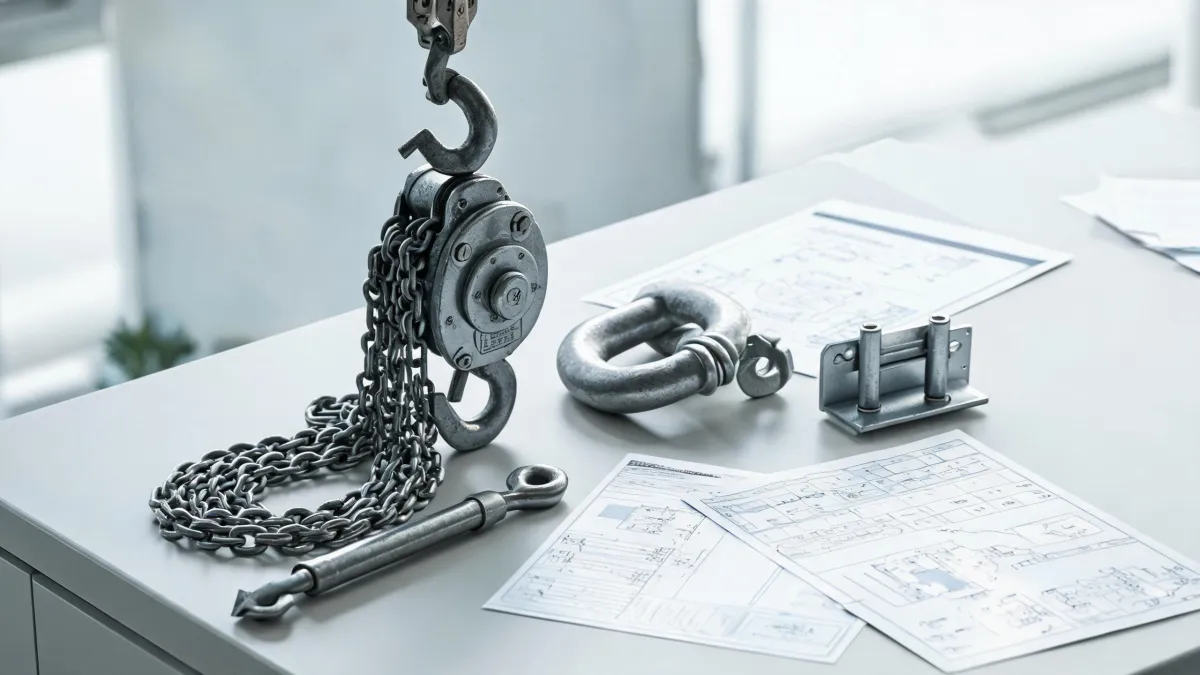
The Bottom Line Up Front
If you're sourcing industrial equipment—Harrington hoists, gate valves, air compressor parts, or cabinet hardware for a facilities build-out—the vendor's invoicing and documentation capability matters more than their quoted price. I learned this the expensive way in 2021, and it's shaped every purchase I've made since.
Here's the math: a vendor that saves you 12% on a $4,000 order but can't generate a proper purchase-order-matched invoice will cost you more in rejected expense reports, re-orders, and internal credibility than the discount is worth.
Why You Should Trust This Assessment
I'm the office administrator for a 200-person metal fabrication company. I manage all industrial supply ordering—roughly $180,000 annually across 11 vendors. That includes everything from Harrington manual chain hoists for our rigging crew to replacement parts for the shop's air compressors to the cabinet hardware we spec'd for the new break room build-out earlier this year.
I report to both operations and finance. That dual reporting line is where I learned the lesson the hard way.
In 2021, I found a great price on replacement air compressor parts from a new vendor—about 18% cheaper than our regular dealer. Ordered $3,200 worth. They sent a handwritten receipt. Finance rejected the expense report outright. I had to eat the cost from the department budget while we scrambled to get a compliant invoice from a vendor who clearly wasn't set up for B2B transactions.
Now I verify invoicing capability before I place any order over $500. That single process change has eliminated roughly 4-6 hours of monthly back-and-forth with accounting.
The Three Checks I Run Before Any Industrial Order
1. PO Number Handling
Does the vendor accept a purchase order number and reference it on the invoice? This sounds basic, but you'd be surprised. About a third of the smaller industrial suppliers I've evaluated can't do this reliably. If they can't match your PO to their invoice, your accounting team will kick it back every time.
What most people don't realize is that 'standard turnaround' from industrial suppliers often includes buffer time they use to batch-process orders. It's not necessarily how long your order takes. When I need a Harrington 1-ton chain hoist for a job starting next week, I call and ask specifically: "If I place this today, what's the ship date?" Not the lead time—the actual ship date.
2. Part Number Accuracy
This is where I made my rookie mistake. In my first year managing procurement, I assumed 'standard' meant the same thing to every vendor. I ordered what I thought was a standard replacement part for a Harrington electric chain hoist and got something that was technically compatible but not OEM-spec. Cost me a $600 reorder and a very uncomfortable conversation with our shop foreman.
Now I always cross-reference part numbers against the OEM catalog—Harrington publishes theirs online—and I ask the vendor to confirm the exact part number in writing before I approve the order.
3. Return and Warranty Terms
Industrial lifting equipment is safety-critical. A gate valve that fails is a problem. A chain hoist that fails is a catastrophic problem. I need to know the return policy and warranty terms before I buy, not after something goes wrong.
Here's something vendors won't tell you: the first quote is almost never the final price for ongoing relationships. Once you've proven you're a reliable customer with predictable order volume, there's usually room to negotiate—but only if you've established that you're not going to return half of what you order.
What This Looks Like in Practice
When I needed to spec cabinet hardware for our facilities upgrade last quarter, I applied the same three checks. The vendor with the best catalog and the glossiest website couldn't provide a PO-matched invoice. We went with a slightly more expensive supplier who could. Total difference: about $340. Total time saved in accounting back-and-forth: probably 3 hours.
When our rigging crew needed a replacement Harrington 5-ton manual chain hoist, I didn't shop on price alone. I checked that the vendor stocked genuine Harrington parts, could ship within 48 hours, and would honor the manufacturer warranty. Paid about 8% more than the lowest quote. Worth every penny.
The 12-point checklist I created after my third invoicing mistake has saved us an estimated $8,000 in potential rework and rejected expenses over the past three years. Five minutes of verification beats five days of correction.
Where This Approach Breaks Down
I'm not a certified industrial engineer, so I can't speak to the technical specifications of lifting equipment beyond what the OEM catalog tells me. If you need help sizing a hoist for a specific load or determining whether a particular gate valve meets your pressure requirements, that's engineering territory—talk to your shop foreman or a qualified engineer.
Also, this verification-heavy approach works best for recurring, predictable purchases. If you're in an emergency situation—a critical air compressor down, a hoist that failed mid-job—you may not have time to run all three checks. In those cases, I default to vendors we've already vetted, even if they're not the cheapest option in the moment.
The bottom line: price is a data point, not a decision. Documentation, reliability, and safety spec compliance are what actually keep your operation running.

Victor Salcedo
Victor Salcedo is an independent fastener, anchor, and spring analyst covering screws, bolts, nuts, washers, rivets, anchors, compression springs, extension springs, and torsion springs. He uses ISO 898-1 property classes alongside clamp-load, thread engagement, proof load, corrosion exposure, anchor substrate, spring rate, travel, and fatigue-cycle checks. His engineering explainers help designers and buyers specify reliable joints or elastic elements, compare materials and finishes, and avoid mismatched strength assumptions.