Harrington Hoists, Chainsaw Gas, and Chain Hoist Mounting: A Shop-Floor FAQ
2026-10-10 by Elise Fournier
-
Shop-Floor FAQ: Harrington Hoists, Chainsaw Gas, and Mounting a Chain Hoist
-
1. What should I check before buying a Harrington chain hoist from a catalog?
-
2. Is Ace Hardware Harrington DE a good source for Harrington parts?
-
3. How do I mix chainsaw gas correctly?
-
4. How do I tighten a chainsaw chain?
-
5. How do I mount a chain hoist safely?
-
6. What's the most expensive mistake with hoists?
-
7. Do I still need to follow old inspection habits?
-
8. Quick pre-job checklist
Shop-Floor FAQ: Harrington Hoists, Chainsaw Gas, and Mounting a Chain Hoist
I'm the maintenance buyer for a small industrial crew. I've been handling hoist, rigging, and shop-supply orders for 9 years. I've personally made and documented 14 significant mistakes, totaling about $18,000 in wasted budget. Now I keep a pre-check list. This FAQ is the short version—the stuff I wish someone had told me before I learned it the hard way.
What's below answers the questions I get from new hires, contractors, and guys who find us through Ace Hardware Harrington DE or the Harrington catalog. I'm not going to pretend every answer fits every job. Use the manual, use a qualified person, and verify current standards.
1. What should I check before buying a Harrington chain hoist from a catalog?
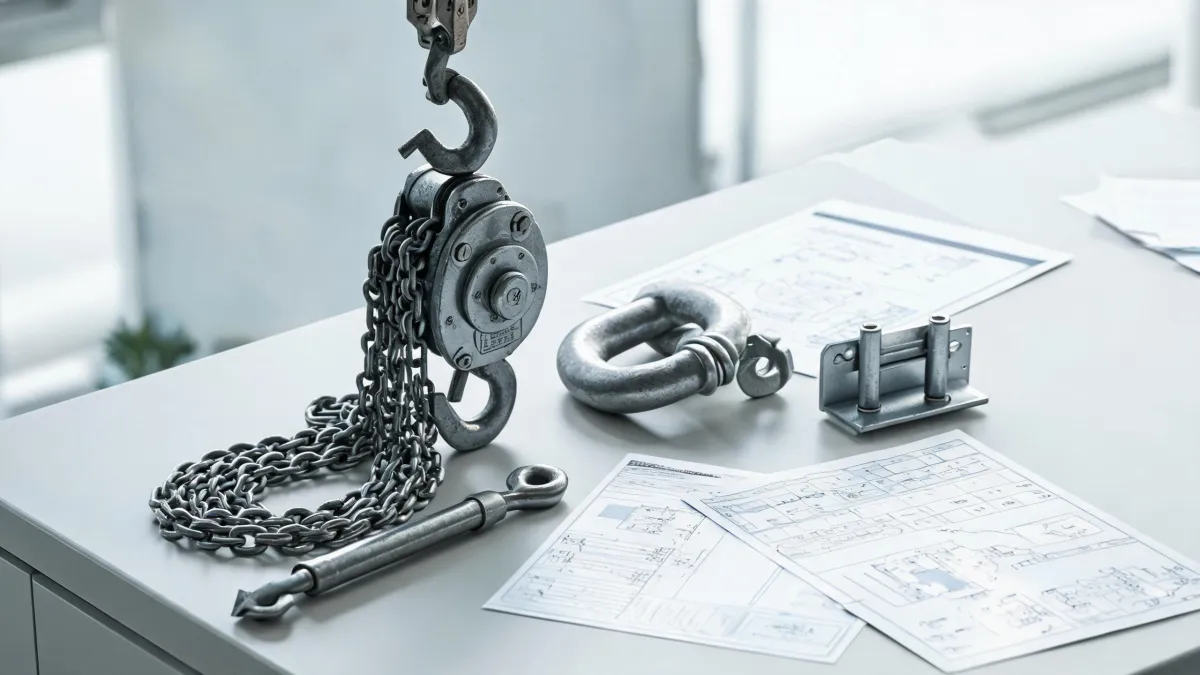
Start with the data plate, not the picture. Capacity, lift height, headroom, hook opening, chain size, voltage/phase, pendant length, and duty cycle. Harrington makes manual and electric hoists, roughly 1/4 ton to 5 ton, but the catalog is a spec sheet—not a wish list. I once ordered a 1-ton unit because the old one looked about the same. The job needed a 2-ton with a different hook reach. That error cost $1,240 in restocking, freight, and a 3-day delay. Now I read the model string out loud before I click buy.
If you need parts, use the model and serial number. Harrington catalog pages are organized that way for a reason. Generic chain from a hardware store is not the same as OEM load chain. That's a red flag. Simple. Check the data plate.
2. Is Ace Hardware Harrington DE a good source for Harrington parts?
Maybe for bolts, chainsaw files, and shop supplies. For hoist parts, call first. Ace Hardware Harrington DE can sometimes order from a catalog or point you to a distributor, but they won't necessarily stock OEM load chain, hooks, or contactors for your exact model. In 2023, I drove 45 minutes for a same part. It wasn't. Wrong pin diameter. Half a day gone. Now I call with model, serial, and a photo of the old part. If they can't verify it, I don't drive.
Bottom line: local hardware is great for generic items. For safety-critical hoist parts, verify OEM part numbers before you pay.
3. How do I mix chainsaw gas correctly?
Follow the owner's manual first. Most two-stroke chainsaws run on a mix of unleaded gasoline and two-stroke oil, often around 50:1, but some models differ. Use fresh gas. Use a measuring bottle—don't eyeball it. I still kick myself for running old mixed gas through a saw because I was in a hurry. It ran lean, scored the piston, and cost $275 to fix. That's way more than a can of fresh fuel.
If you can get ethanol-free gas, use it. Ethanol attracts water, and small engines hate water. Mix only what you'll burn in about 30 days. Label the can. If you're searching chainsaw gas because the saw won't start, dump the old mix, clean the plug, and start fresh. Time pressure is not an excuse to skip fuel quality.
4. How do I tighten a chainsaw chain?
Do it cold. Loosen the bar nuts enough that the bar can move. Turn the tensioner screw clockwise while lifting the nose of the bar. You want the chain snug against the bar but still able to be pulled around by hand with slight drag. There should be no sag below the bar, and it shouldn't bind. Then tighten the bar nuts and check again.
People think a loose chain is the only danger. Actually, too-tight is just as bad—it overheats the bar, wears the sprocket, and can snap the chain. The root cause is usually a tensioning routine that's rushed, not a bad chain. I overtightened one saw after a quick job and cooked a bar. $60 plus downtime. Now I check tension before every tank of gas. It takes 30 seconds.
5. How do I mount a chain hoist safely?
Mount it to a rated anchor point. Not a pipe, not a random beam, not an eye bolt from the bottom of a coffee can. The structure has to be evaluated by someone qualified. The hoist's capacity is only one part of the system. The trolley, hook, beam, and anchor all matter. Follow the manufacturer's manual and the current ASME B30.16 standard for overhead hoists. OSHA 29 CFR 1910.179 covers overhead and gantry cranes and is another reference to verify, but the key is simple: if you can't prove the anchor is rated, don't hang a load from it.
I once mounted a 1-ton hoist to an unrated eye bolt because it felt solid. Under a test load, it bent like a banana. We got lucky—no one was under it. That mistake cost about $400 in repair and a safety meeting I never want to repeat. Now I use a checklist: rated anchor, correct hook latch, vertical chain, no sharp edges, no side-pull unless rated, and a documented inspection before use.
6. What's the most expensive mistake with hoists?
Assuming the cheapest purchase price is the cheapest total cost. The upside of a no-name electric hoist was saving about $600. The risk was a 2-day production stop while we waited for a part that didn't exist locally. I kept asking myself: is $600 worth potentially missing a client deadline? The expected value said maybe. The downside felt catastrophic. We went with a Harrington electric chain hoist because the manuals, parts, and service network were available.
That's the causation reversal. People think a higher price causes higher cost. Actually, poor parts support and downtime cause the real cost. The vendor that can keep you running can charge more because they solve the expensive problem.
7. Do I still need to follow old inspection habits?
Yes, but update the tools. What was best practice in 2020 may not apply in 2025. Digital inspection logs, QR-coded assets, and better overload protection have changed how we track hoist condition. But the fundamentals haven't changed: inspect hooks for cracks, check chain for gouges and wear, test limit switches, verify tags, and never exceed rated capacity. Industry evolution isn't an excuse to skip the basics. It's a reason to make the basics easier to document.
8. Quick pre-job checklist
- Model, serial, and capacity match the job.
- Anchor point is rated and verified.
- Chain is not twisted, kinked, or worn past limits.
- Hook latch works. No cracks, no spread.
- Chainsaw: fresh mix, correct ratio, chain tension checked cold.
- Harrington parts: OEM number confirmed before ordering.
- Inspection record signed and dated.
If you're near Harrington, DE and looking for Ace Hardware Harrington DE, call ahead. If you're ordering from the Harrington catalog, write down the full model. If you're mixing chainsaw gas or tightening a chain, slow down. The 30 seconds you save is never worth the $400 mistake.

Elise Fournier
Elise Fournier is an independent builders hardware and tool storage analyst covering hinges, handles, brackets, casters, drawer slides, door locks, hooks, tool boxes, chests, cabinets, carts, and bags. She references ANSI/BHMA A156.9 cabinet-hardware practices while examining cycle life, rated load, pull force, slide extension, caster capacity, corrosion finish, drawer retention, sealing, and transport ergonomics. Her selection guides help installers, workshops, and buyers plan durable fittings and storage around access, load, mobility, and environment.