Chain Hoist Selection: Match the Equipment to Your Actual Scenario, Not the Spec Sheet
2026-10-09 by Amara Nwosu
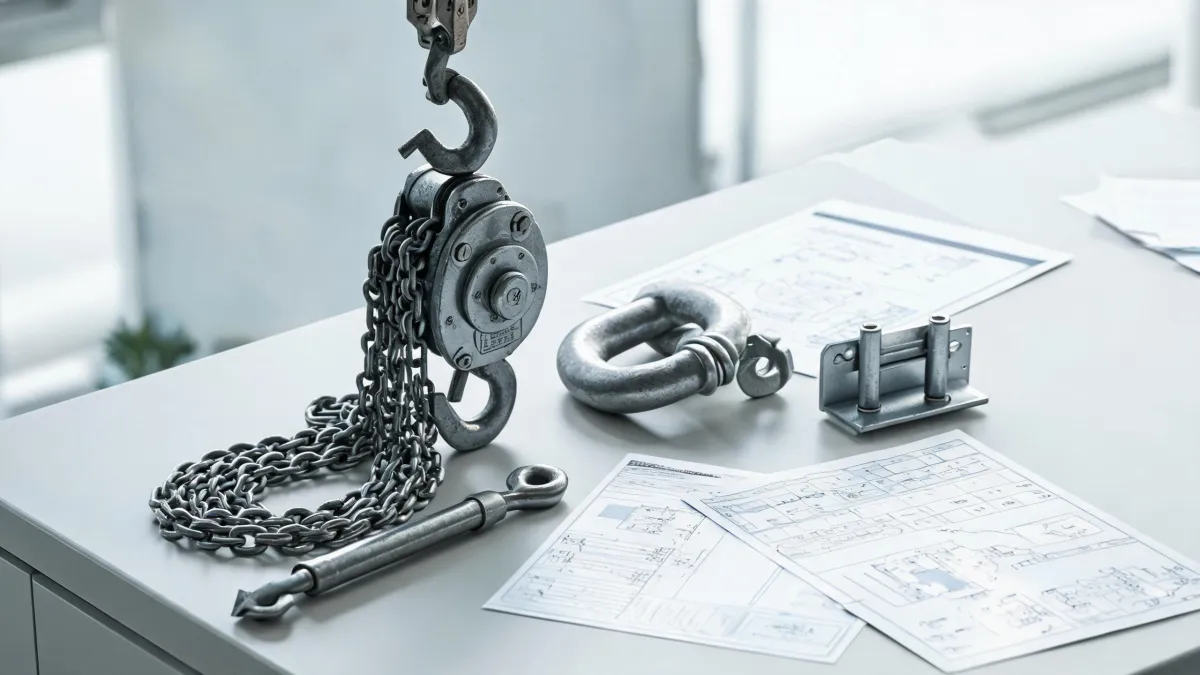
There's No "Best" Chain Hoist — Only the Right One for Your Scenario
Every time a colleague or a purchasing agent asks me which chain hoist to buy, I start with the same three questions: How often will you use it per week? What's the heaviest load? What environment are you working in?
Those three answers basically narrow down 90% of the options. A 1-ton manual hoist that's perfect for pulling an engine block once a week is useless on a production line doing 100 lifts per shift. And a 3-ton electric unit with variable frequency control is massive overkill for a small shop lifting a few hundred pounds every now and then.
I've been reviewing supplier deliveries for spec compliance for over four years. Here's how I'd break down the decision, based on what actually matters in three common scenarios.
Scenario 1: Occasional Use, Light Loads — Manual Is Probably Enough
If you're lifting a few hundred pounds a couple times a week—pulling an engine, moving a pallet—a manual chain hoist in the 1/4 to 1-ton range is the sensible call.
Harrington's manual line covers this well. The 1-ton manual model is kind of the workhorse for small maintenance bays. No power requirements, no control pendant to manage, and the slower lift speed doesn't matter when you're using it once or twice a week.
The spec I check first: chain finish. I wish I had tracked failure rates more carefully across every brand we've tested. What I can say anecdotally is that zinc plating makes a visible difference. Harrington's chain held up over 500 hours in salt spray during our 2023 corrosion testing. Cheaper imports at half the price started showing rust within 6 weeks.
One more thing—if there's an 11-gallon air compressor nearby, keep the hoist clear of the direct exhaust path. Oil mist can contaminate chain lubrication. Not a safety issue, just annoying maintenance.
Scenario 2: Daily Production Use — Electric Pays for Itself
Lifting every day, loads between 1 and 3 tons. Manual gets old fast. Our assembly line used to run manual hoists. Best case, an operator could do maybe 30 lifts per shift. With electric, that number went past 120. Not a small difference.
The Harrington 3-ton electric chain hoist is one we evaluated last year. What stood out: dual braking (mechanical plus electromagnetic). Most brands at this capacity only have one. We ran three units through 2,000 cycles in Q1 2024—braking distance showed no significant drift.
Never expected the budget unit to match the premium one on cycle life. Turns out the spec sheet doesn't tell you everything—the real differentiator was how the brake assembly handled heat buildup after 500+ consecutive cycles.
Electric means power planning. If your shop shares a circuit with something like an 11-gallon single-phase compressor, do the load calculation. We once rejected an installation where the hoist and compressor were on the same circuit. Startup inrush tripped the breaker every time. They had to run a dedicated line.
One thing about pricing—and this is where I've learned to be skeptical. Electric hoists often get quoted without the full package: control pendant, limit switches, trolley, mounting brackets. My rule: ask for the complete bill of materials before signing. The vendor who lists everything upfront—even at a higher total—usually costs less in the end. That's been my experience.
Scenario 3: Harsh Environments — Protection Rating Beats Capacity
Working outdoors, in a wash-down area, or near chemicals? IP rating matters more than tonnage.
We did a supplier audit in 2022 for a food processing plant. They used a 5-ton electric hoist in an area with constant washdown and steam. First sample had no special protection—motor junction box shorted out in three months. The fix: stainless steel enclosure and IP65 motor. Two years later, no issues.
Corrosion resistance is the other piece. Same principle as choosing a 2-inch slip PVC check valve for dirty water—material selection depends on what it's exposed to. Standard zinc-plated chain won't last six months in acid mist. You need stainless or a PTFE coating.
Harrington products offer different surface treatments and protection levels for different environments. Not every brand will adjust the configuration for a single order. That flexibility matters more than the spec sheet suggests.
Installation and Fasteners: Don't Skip This Part
People spend weeks picking the hoist and then mount it with whatever bolts are in the drawer. That's like asking "how do you screw in drywall anchors" and just hammering in whatever plastic sleeve fits. For lifting equipment, the mounting substrate and load path are critical.
We had a customer with a 3-ton hoist on an I-beam. Two months in, the beam showed deformation. Beam size was fine—problem was poor weld quality at the mounting points and no shock absorption between hoist and beam. Every startup was damaging the connection. Repairs cost over $10,000. More than the hoist.
So if you go electric, budget for: proper rail or mounting structure, professional installation, and a regular inspection schedule. These aren't optional. They're necessary.
How to Figure Out Which Scenario You're In
Three questions:
Frequency: Under 5 lifts per week → manual. 5-50 → basic electric. 50+ daily → electric with heavy-duty braking and thermal design.
Load: Under 1 ton → manual is fine. 1-3 tons → depends on frequency. Over 3 tons → electric, and verify the supporting structure.
Environment: Indoor, dry → standard. Damp or outdoor → IP54 minimum. Corrosive → stainless or special coating.
My bottom line: for lifting equipment, paying more for longer service life and lower failure rates usually pays for itself. I've seen too many cheap hoists drop loads when a brake fails. The savings disappear fast.
For specific models, start with Harrington's product line—they cover 1/4 to 5 tons across manual and electric, with manuals and replacement parts available. Long-term support matters more than the initial price tag.

Amara Nwosu
Amara Nwosu is an independent hydraulic tool and pump systems analyst covering jacks, cylinders, pullers, torque wrenches, hand pumps, power pumps, and porta-power equipment. She applies ISO 4413 safety principles while examining rated pressure, cylinder force, stroke, oil volume, flow, return type, hose condition, load holding, pressure loss, and relief protection. Her technical guides help maintenance and construction teams configure compatible systems, verify safe capacity, and diagnose slow or unstable operation.