Can a Chain Hoist Be Used Horizontally? An Honest Answer Most Buyers Get Wrong
2026-10-09 by Koji Sakamoto
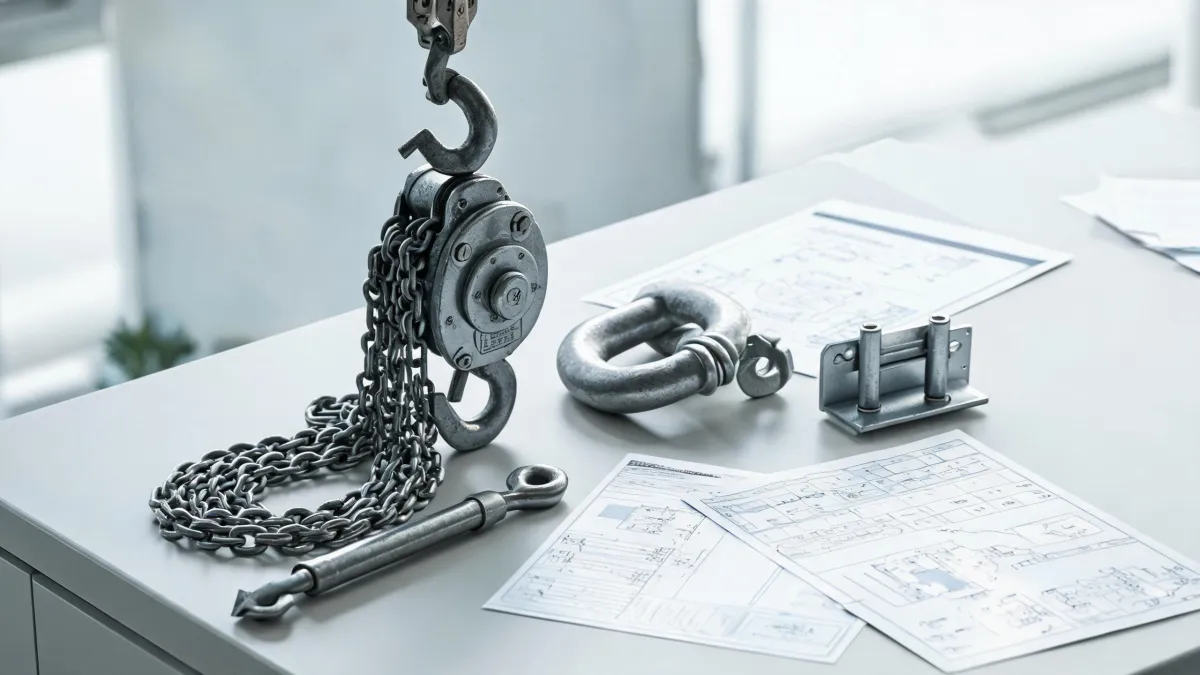
Can a chain hoist be used horizontally? Short answer: not the way you're probably thinking.
I'll say it plainly: most chain hoists are designed for vertical lifting, and running one horizontally for anything more than a short, low-load pull is a good way to void your warranty — or worse, drop a load on someone. I know that's not the answer everyone wants. I also know it's the answer that kept two of my projects from turning into incident reports.
I've been handling rigging and lifting orders for going on 9 years. In that time I've personally misfiled enough spec sheets to waste about $4,100 of company budget on returns, restocking fees, and one very expensive overnight shipment from a distributor who was (rightfully) annoyed at me. Now I keep the checklist our team actually uses before anything ships to a job site.
Why the vertical-only rule exists (and why people ignore it)
Here's the thing about a chain hoist — manual or electric. Every internal component assumes gravity is doing part of the work.
In a standard vertical hoist, the oil in the gear case pools at the bottom and the lubricating surfaces dip into it. The chain guide feeds the load chain cleanly through the sprocket. The brake — usually a Weston-style or a disc brake on electric units — engages based on direct downward tension. Tilt the whole assembly sideways and you've changed all of that at once.
What breaks first? Usually the brake, which is a terrifying thing to learn in a manufacturer's service bulletin rather than in a training session. Second is chain wear, because the guide isn't centering the chain anymore. Third — and this is where the money goes — is the gear case, which was lubricated for one orientation and now isn't.
I learned this the way I learn most things: by doing it wrong.
In February 2021, I approved a horizontal pull with a 1-ton manual hoist for a storm-damaged roof section in Harrington. It looked fine on paper. We were pulling sheet metal, low load, short distance. What I didn't account for was the angle — 40 degrees off vertical, sustained over four hours. The gear case ran dry and the brake started slipping. $890 in replacement parts, plus a one-week delay on the roof repair that the customer noticed. I still fill out the pre-check form twice on storm damage roof repair Harrington jobs because of that week.
The exception that trips everybody up
Here's where the honest-limitation part gets uncomfortable: some chain hoists genuinely can be used horizontally. Not "kind of." Not "if you're careful." Actually rated and certified for horizontal or angled use by the manufacturer.
The problem is that people apply that exception to the wrong hoist.
Electric chain hoists with sealed gear cases and dedicated chain guides are sometimes rated for pulling at an angle. The engineering exists. But the rating is model-specific, angle-specific, and often duty-cycle-limited. I don't have hard data on what percentage of electric hoist models carry a horizontal rating, but in our own catalog of inquiries, my sense is it's under 15%. And that number gets misquoted constantly by people who saw someone do it once on a job site.
Manual chain hoists? Almost never. Unless the data sheet explicitly says otherwise, assume the answer is no. Our own manuals — and the ones I've seen from competitors — are pretty consistent on this point.
Which brings me to the mistake I see new buyers make over and over: they treat "can it be done" and "is this hoist rated for it" as the same question. They're not.
What I'd actually recommend instead
If you're dealing with a horizontal or angled pull, here's the decision tree I use now:
- Read the lifting angle spec. On every hoist, this is a number in the manual — often buried, sometimes in a table you have to squint at. It will say something like "vertical only" or "rated for 0–15° from vertical." If you can't find it, call the manufacturer. Don't assume.
- Match the tool to the job. For sustained horizontal pulls, a lever hoist or a pulling-rated winch is usually the right answer, not a chain hoist. For short, low-angle positioning work, a hoist rated for the angle is fine.
- Check the accessories. Harrington chain hoist parts — chain guides, brake assemblies, load chain — are rated for the original orientation. If you're sourcing replacement parts for a hoist being used off-vertical, you're going to replace them more often, and that's a cost people never put in the project budget.
- When in doubt, ask an application engineer. I'm not an engineer. What I've learned about hoist internals comes from service bulletins and one very patient product specialist who explained brakes to me for an hour on a Tuesday. This is the kind of question where a five-minute call saves a $900 mistake.
Before you argue — I've heard the counterargument
The pushback I usually get is: "We've been doing horizontal pulls with chain hoists for years and nothing's happened."
Fair. I believe you. And I'd point out that "nothing has happened yet" is how I felt in early 2021 right up until the brake slipped on the third day. Hoist failure isn't a gradual thing. It's binary. The load is up, and then it isn't.
The other counterargument is about cost. Yes, buying a properly rated hoist or a lever hoist for the horizontal job costs money. But I've seen exactly one application where the extra cost was more than the failure — and that case involved a demolition crew who pooled equipment across three sites and self-insured. For everyone else, the math isn't close.
I'll add one more honest boundary: if your question is about overhead lifting in a specific regulated environment — say, a plant where OSHA or local lifting directives apply — that's outside what I can speak to. I can tell you what the manufacturer's manual says and what our order history shows. I can't tell you how your inspector is going to interpret it. Talk to them.
The bottom line
Chain hoists are engineered for vertical lifting. That's not a limitation the industry is hiding — it's the design premise. If you need horizontal pulling, buy the tool rated for it. If you're not sure whether your hoist is rated for it, stop and find out before the load goes up.
I recommend the honest version of this answer to every customer who asks, even when it costs us a sale on a rigging accessory we don't need to sell. Because the alternative — a hoist that fails at the wrong moment — isn't a return we ever want to process.
Take it from someone who's already paid the tuition.

Koji Sakamoto
Koji Sakamoto is an independent pneumatic tool and compressor analyst covering air compressors, impact wrenches, air ratchets, nail guns, and general air-tool systems. He applies ISO 11148 safety requirements while evaluating working pressure, free-air delivery, air consumption, hose loss, duty cycle, fastener capacity, vibration, noise, lubrication, and moisture control. His application guides help workshops and contractors size air supplies, compare tool output, and prevent performance losses caused by undersized or poorly maintained systems.