Chain Hoist Applications: A Scenario-Based Guide for Buyers Who Want to Get It Right
2026-09-22 by Maren Jorgensen
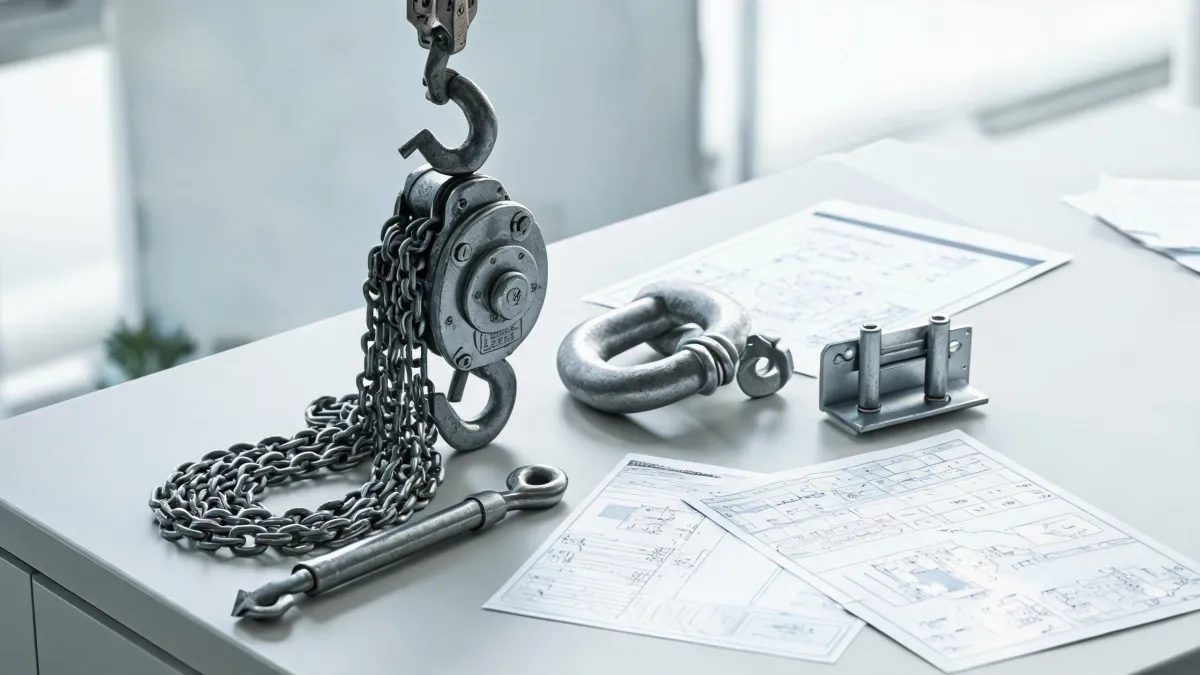
There's No Single Answer to 'What Do I Need a Chain Hoist For?'
Every few months someone on my floor sends me a request that sounds simple: "We need a chain hoist." No specs, no details. Just the words. And every time, I have to go back and ask the same questions — what are you lifting, how high, how often, and do you have power where it's going?
Here's why that matters. The applications for a chain hoist cover everything from a homeowner pulling an engine block to a plant crew swapping a T-211-Y globe valve on a three-story pipe rack. Those two jobs need completely different equipment. Buying wrong isn't just a waste of money — it's a safety issue when you've got something heavy hanging over people's heads.
So instead of giving you one generic recommendation, I'm going to break this down by scenario. You'll probably recognize yours pretty quick.
Scenario A: Residential and Light Contracting Work
This is the chimney repair guys, the roofers, the two-person renovation crews. I've processed purchase orders for outfits doing chimney repair in Harrington Park and similar areas where they're pulling caps, lifting flue liners, or hauling materials up to a roof line.
For this kind of work, a manual chain hoist is almost always the right call. Here's why:
- No power required. If you're on a roof or in an attic, you don't want to run extension cords to a hoist.
- Portability. A 1-ton manual unit weighs under 30 pounds. One person can carry it up a ladder.
- Precision. Manual hoists let you control the load inch by inch. That matters when you're positioning a flue cap.
- Price point. You're looking at a few hundred dollars for a quality unit, not a few thousand.
A Harrington 1 ton chain hoist manual is a common pick here — and honestly, for good reason. They're rated for the load, they hold up in outdoor conditions, and the manuals aren't written in broken English. I mention the manual because I've had crews call me from a job site asking how to adjust the brake or replace a chain pin. If the documentation is garbage, you're stuck.
One thing I learned the hard way: always check whether replacement parts are available before you buy. We bought a cheap off-brand hoist once because it was on sale. Six months later a chain guide wore out and we couldn't source a replacement. The whole unit became scrap. That's not a shop deal — that's a $300 lesson.
Scenario B: Shop and Garage Use
This is the auto shop, the fabrication shop, the maintenance garage. You're lifting engines, transmissions, welding tables, maybe pulling equipment for service.
Here's where it gets interesting. A lot of people in this category default to manual hoists because they're cheaper. And for a one-bay operation doing five lifts a week, that's fine.
But if you're doing 15, 20, 30 lifts a day, a manual hoist will wear you out. I've talked to shop foremen who switched from manual to electric after their guys started complaining about shoulder pain. That's a real cost — not just in workers' comp risk, but in productivity.
Electric chain hoists for shop use typically run 1/4 to 2 tons. You want a pendant control so the operator can stand clear of the load. And you want a hoist that's rated for the duty cycle you're actually running — not the one the spec sheet says under ideal conditions.
Now, about shop deals on hand tools — I get asked about this a lot. Yes, you can find good prices on hoists and rigging gear during seasonal sales. But be careful. A "deal" on a hoist with no service network and no parts availability isn't a deal. It's a future headache. I'd rather pay 15% more from a supplier who can get me a replacement brake assembly in two days than save that 15% and wait three weeks.
Bottom line for shops: if you're lifting frequently, go electric. If it's occasional, manual is fine. And always — always — buy from a source that stocks parts.
Scenario C: Industrial and Process Applications
This is the heavy end. Refineries, chemical plants, water treatment facilities, large-scale manufacturing. The kind of place where you're not lifting an engine — you're lifting a T-211-Y globe valve that weighs 400 pounds and costs more than most people's cars.
In these environments, chain hoists are doing real work under real pressure. Maintenance windows are tight. If a hoist fails during a turnaround, you're not just behind schedule — you're burning $50,000 a day in downtime.
What matters here:
- Load rating with margin. You never buy a 1-ton hoist for a 1-ton load. You buy a 2-ton hoist. The rated capacity is a limit, not a target.
- Duty cycle and ingress protection. Industrial environments have dust, moisture, and chemicals. An IP55-rated hoist isn't optional — it's the minimum.
- Certification and documentation. You need load test certificates, maintenance logs, and compliance documentation. If your supplier can't provide these, your safety team will shut you down.
- Parts and service response time. When a hoist goes down, you need parts yesterday. Not next week.
This is where the time certainty premium really kicks in. In March 2024, we paid about $600 extra to get a replacement hoist shipped overnight instead of standard freight. The alternative was delaying a scheduled maintenance window that had 12 contractors already on site. That $600 was nothing compared to what a delay would have cost.
Honestly, I'm not sure why some suppliers can consistently hit rush timelines while others can't even hit their standard ones. My best guess is it comes down to whether they hold inventory themselves or drop-ship from a manufacturer. If they're drop-shipping, they have zero control over timing. If they stock it, they can actually make things happen.
How to Figure Out Which Scenario You're In
Okay, so you've read through all three. Which one sounds like you? Here's a quick way to tell:
Ask yourself these four questions:
- How often will you use it? Less than 5 lifts a week → manual. More than 10 a day → electric. In between → depends on the next three answers.
- Do you have reliable power at the lift point? No → manual. Yes → electric is an option.
- What happens if it fails mid-job? You lose an afternoon → manual is fine. You lose a production day → you need a supplier with fast parts and service.
- Who's using it? One experienced person occasionally → manual. Multiple people, daily → electric with proper training.
If you're still on the fence, I'd lean toward manual for anything under 1 ton and under 10 lifts a day. It's simpler, cheaper, and there are fewer things to break. When you start pushing past those thresholds, electric starts paying for itself in productivity and reduced injury risk.
The one thing I'd say to anyone in any scenario: don't buy a hoist the way you'd buy a hammer. This isn't a commodity. The brand matters less than the support behind it. The price matters less than whether you can get parts when something wears out. And the rated capacity is not a suggestion — it's a hard line.
Get those things right, and you'll only have to make this decision once.

Maren Jorgensen
Maren Jorgensen is an independent hand tool and torque applications analyst covering wrenches, pliers, screwdrivers, hammers, sockets, ratchets, hex keys, and tool sets. She applies ISO 6789-1 torque-tool conformance principles while examining jaw capacity, leverage, fastener engagement, torque range, accuracy, handle geometry, and material hardness. Her practical guides help tradespeople and procurement teams select suitable tools, plan controlled tightening, and compare durability without relying on brand reputation alone.