Harrington Manual vs Electric Chain Hoists: What I Wish I Knew Before Buying
2026-09-20 by Elise Fournier
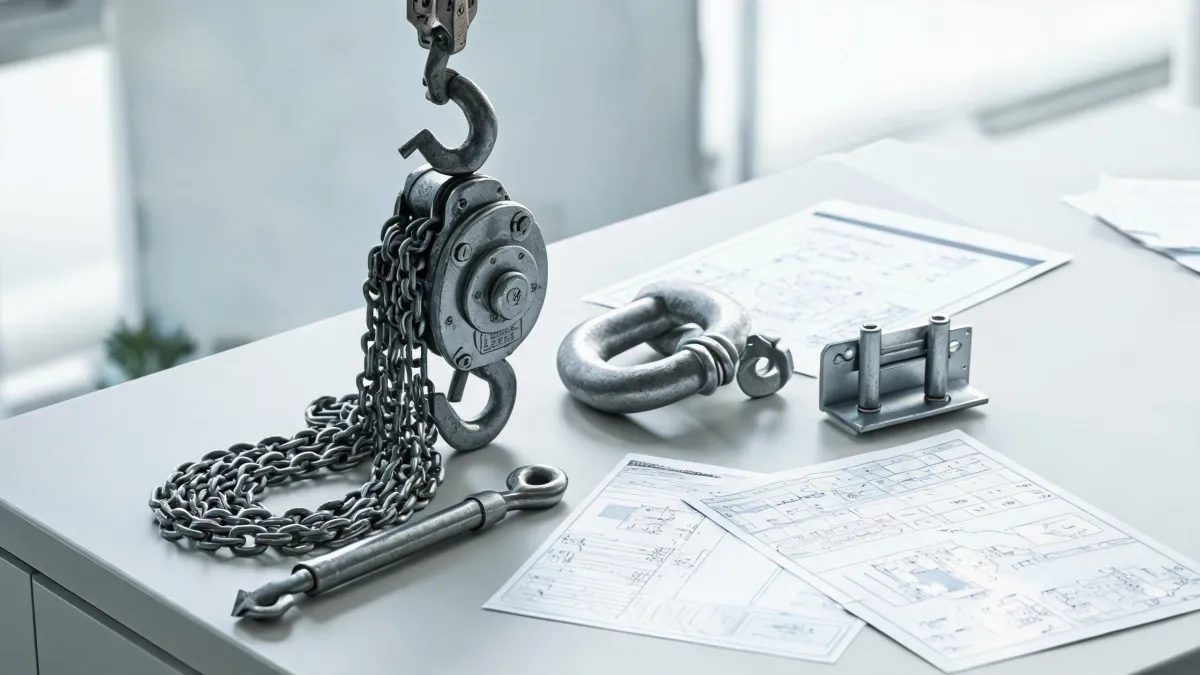
Five years ago, I ordered 10 electric chain hoists for an outdoor construction site. Sounded smart—until the power supply failed and we were stuck with $3,200 worth of dead weight. That mistake taught me more than any spec sheet. So here's the honest comparison I wish I'd had: manual vs electric chain hoists. I'll break it down by cost, speed, maintenance, and safety—no fluff, just what actually matters on the floor.
Cost: Upfront Price vs Total Cost of Ownership
Let's start with the obvious: manual hoists are cheaper. A 1-ton Harrington manual chain hoist runs about $150–400, while a comparable electric model costs $800–2,500. That gap is real. But the sticker price isn't the whole story.
Electric hoists need power, and that means wiring, generators, or extension cords—plus the labor to set them up. Manual hoists need muscle. I learned this the hard way in 2019 when I bought electric for a remote site with no reliable power. Looking back, I should have matched the hoist to the task frequency and power availability. At the time, I assumed electric was always the professional choice. It wasn't.
So, what's the real cost? For occasional lifts, manual wins. For daily, repetitive lifting, electric pays for itself in labor savings. In my opinion, if you're lifting more than 10 times a day, go electric. Otherwise, manual is usually the smarter buy.
Speed and Efficiency: When Minutes Matter
Manual hoists lift at about 1–2 feet per minute. Electric hoists? 10–20 feet per minute. That's not a small difference. Speed matters. A lot.
On a recent job, we had to lift 50 loads to a mezzanine. With a manual hoist, that was a full day of cranking. With an electric, we finished by lunch. The labor cost alone justified the electric hoist's price.
But here's the surprise: Never expected manual hoists to outperform electric on a remote job site. Turns out, no power means manual wins every time. We once had a generator fail mid-lift. The electric hoist was dead weight. The manual one kept working. So if your site is unpredictable, keep a manual hoist as backup.
Maintenance and Parts Availability
All chain hoists—manual or electric—use a chain, hook, and gear system to lift heavy loads. The difference is the power source. Electric hoists add a motor, brake, and controller, which means more parts that can fail.
According to ASME B30.16 (2024), all chain hoists must have a rated load clearly marked and be inspected regularly. That's non-negotiable. But maintenance frequency varies.
- Manual hoists: Fewer parts, simpler design. Usually just need chain lubrication and hook inspection. Parts are cheap and easy to find—Harrington sells replacement chains, hooks, and brake assemblies.
- Electric hoists: Need motor checks, brake adjustments, and electrical inspections. Parts cost more, but Harrington's availability is solid. We keep spare contactors and limit switches on hand.
So glad we stocked spare chains and hooks last year. Almost ran out mid-project, which would have meant a 3-day delay. Trust me, a $50 spare part can save a $5,000 downtime disaster.
Safety and Operation: Fatigue Is the Hidden Risk
Electric hoists often come with overload protection and limit switches. Manual hoists rely on the operator to stop at the right point. That's a big deal when you're lifting 2 tons.
In my opinion, for repetitive lifting, electric is safer because it reduces operator fatigue. Tired workers make mistakes. I've seen a manual hoist drop a load because the operator was exhausted and misjudged the brake. No one got hurt, but it was close.
That said, manual hoists rarely fail if maintained properly. The risk is human error. From my perspective, you need a trained operator for both, but electric hoists add a layer of consistency.
Which One Should You Choose?
Here's the bottom line. No single answer fits everyone. Match the hoist to your job.
- Choose a manual chain hoist if: You lift infrequently, work in remote locations without power, have a tight budget, or need a reliable backup. A 1-ton Harrington manual hoist is a workhorse.
- Choose an electric chain hoist if: You lift daily, need speed, handle heavy loads (2–5 tons), have reliable power, and want to reduce labor costs. The upfront cost hurts, but the productivity gain is real.
And if you're still wondering what all chain hoists use to lift heavy loads—it's the same basic mechanism: a chain wrapped around a gear, pulled by hand or motor. The principle hasn't changed in decades. What's changed is the execution: better brakes, lighter materials, and smarter controls. The industry is evolving, but the fundamentals of safe lifting remain.
Prices based on publicly listed quotes from major industrial suppliers, January 2025; verify current rates. Always follow ASME B30.16 for inspection and safety.

Elise Fournier
Elise Fournier is an independent builders hardware and tool storage analyst covering hinges, handles, brackets, casters, drawer slides, door locks, hooks, tool boxes, chests, cabinets, carts, and bags. She references ANSI/BHMA A156.9 cabinet-hardware practices while examining cycle life, rated load, pull force, slide extension, caster capacity, corrosion finish, drawer retention, sealing, and transport ergonomics. Her selection guides help installers, workshops, and buyers plan durable fittings and storage around access, load, mobility, and environment.