Local Dealer vs Online Supplier for MRO Parts: Harrington Electric Chain Hoists in Nashville, TN
2026-09-14 by Maren Jorgensen
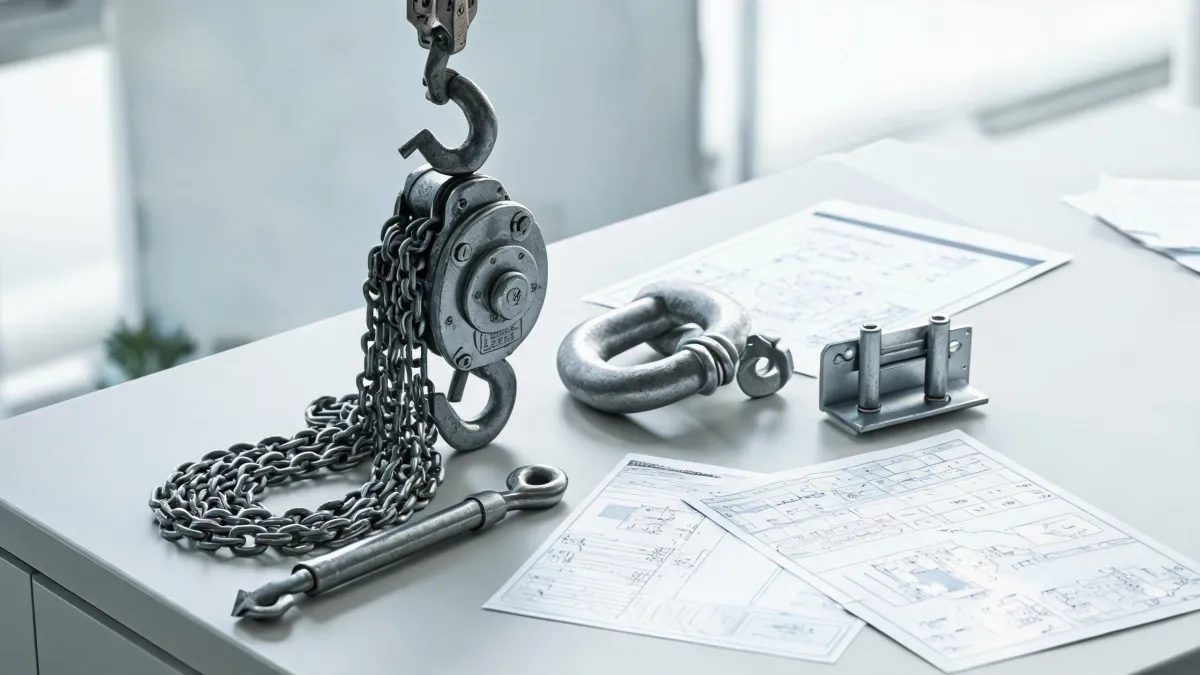
Why I Compare Local Industrial Distributors and Online Suppliers
I'm an office administrator for a 180-person manufacturing company. I manage all MRO ordering—roughly $340,000 annually across 12 vendors. I report to both operations and finance. I took over purchasing in 2020, and in our 2024 vendor consolidation project, I had to decide where to buy everything from Harrington electric chain hoists in Nashville, TN to hydraulic pump parts to an Edge Series air hammer set. The question wasn't which supplier is better overall. It was which supplier is better for each type of order.
Here's the comparison framework I use now: delivery speed, parts matching and technical support, and total landed cost including invoice compliance. If you've ever had a maintenance tech wait on a critical part, you know why those three matter more than the sticker price. I've processed 60-80 orders annually, and the pattern is pretty consistent. The vendor who looks cheapest at quote time often isn't cheapest after freight, returns, and admin time. And the local branch that seems expensive can actually save money when a line is down. So I compare by order type, not by brand loyalty.
Dimension 1: Delivery Speed and Stock Availability
Local industrial distributor: They can often get a replacement part from their Nashville warehouse or a nearby branch. For a Harrington electric chain hoist that's down, that can mean two days instead of six. I learned this in 2024 when a brake component for a 2-ton unit failed. Our local distributor had the part transferred from another branch in two days. The online listing showed next-day shipping, but the actual carrier estimate was six business days because it shipped LTL.
Online supplier: For smaller, planned items like hydraulic pump parts or an Edge Series air hammer set, online can be faster and cheaper. I ordered hydraulic pump seals in January 2025 and they arrived in three days. But the next-day badge doesn't mean much when the item is oversized or comes from a third-party seller.
My conclusion: For downtime-critical lifting equipment, local wins. For planned maintenance spares and standard tools, online can win. The reverse of what I expected: local isn't always slower, and online isn't always faster. Everything I'd read said online suppliers beat local dealers on speed. In practice, for LTL freight and serial-number-specific hoist parts, the opposite was true.
Dimension 2: Parts Matching and Technical Support
Local distributor: They can look at the model and serial plate, pull the correct manual, and confirm the part number. Harrington has manuals and replacement parts for manual and electric chain hoists, and the local counter staff usually knows which parts are interchangeable across capacities. That matters when you're dealing with 1/4-ton to 5-ton units and you don't want to guess.
Online supplier: The catalog may say OEM equivalent or factory direct. Per FTC guidelines (ftc.gov), advertising claims like OEM equivalent or factory direct must be truthful and substantiated.
Per FTC guidelines (ftc.gov): advertising claims must be truthful and not misleading, and they must be substantiated with evidence.
That doesn't mean every listing is wrong. It means you need to verify before you buy. I've had to return hydraulic pump parts twice because the online listing didn't match the pump series.
My conclusion: For complex assemblies, safety-related hoist parts, and anything where the wrong part stops production, local support pays for itself. For simple consumables, online is fine if the return policy is clear. If you're asking should I use screw anchors in wood, a good supplier won't just sell you an anchor. They'll ask about load direction, wood type, and whether the load is overhead. That's customer education, not a sales pitch.
Dimension 3: Total Landed Cost and Invoice Compliance
Local distributor: The unit price is often 8% to 15% higher than the cheapest online listing. But the invoice is clean, terms are net 30, and returns go back on a truck. When I buy from them, finance doesn't chase me for documentation.
Online supplier: The price looks lower until you add freight, restocking fees, and time. I still kick myself for a 2022 order from a new vendor that was $600 cheaper. They couldn't provide a proper invoice—handwritten receipt only. Finance rejected the expense report. I ate $2,400 out of the department budget after returns and reordering. Now I verify invoicing capability before placing any order, especially for hydraulic pump parts and Edge Series air hammer set purchases.
My conclusion: The cheapest line item isn't the cheapest order. Earlier, I used to chase the lowest quote on every Harrington chain hoist part. Then I tracked 60-80 orders annually and found that invoice rework and wrong-part returns cost more than the local premium. The local distributor wasn't the cheapest, but it was the most predictable. There's something satisfying about finally getting our vendor process systematized: no more 3am worry sessions about whether a critical hoist part will arrive or whether finance will reject the invoice.
When to Choose Local vs Online
Choose a local industrial distributor when:
- You need Harrington electric chain hoists in Nashville, TN, and downtime is expensive.
- The part must match a specific serial number or manual.
- You need a compliant invoice, net terms, or easy returns.
- You want a human to verify a load-rated application before you buy.
Choose an online supplier when:
- You're buying planned maintenance spares like hydraulic pump parts and can wait a few days.
- The item is a standard tool, such as an Edge Series air hammer set, and the return policy is clear.
- You've confirmed the part number, invoice terms, and freight cost in writing.
- You're comparing multiple quotes and the savings survive the total landed cost math.
Bottom line: don't pick one channel forever. Build a mixed vendor list. For lifting equipment and safety-related parts, start local. For commodity parts and planned tool purchases, test online—but verify the invoice and return process first. And if you're ever unsure about a fastening question like should I use screw anchors in wood, ask someone who will explain the failure modes, not just sell you a box.
Prices and lead times are based on my purchasing records and quotes from January 2025; verify current rates and availability. Regulatory information is for general guidance only. Consult official sources for current requirements.

Maren Jorgensen
Maren Jorgensen is an independent hand tool and torque applications analyst covering wrenches, pliers, screwdrivers, hammers, sockets, ratchets, hex keys, and tool sets. She applies ISO 6789-1 torque-tool conformance principles while examining jaw capacity, leverage, fastener engagement, torque range, accuracy, handle geometry, and material hardness. Her practical guides help tradespeople and procurement teams select suitable tools, plan controlled tightening, and compare durability without relying on brand reputation alone.