Before You Buy the Cheapest 2 Ton Chain Hoist—Read This
2026-08-31 by Maren Jorgensen
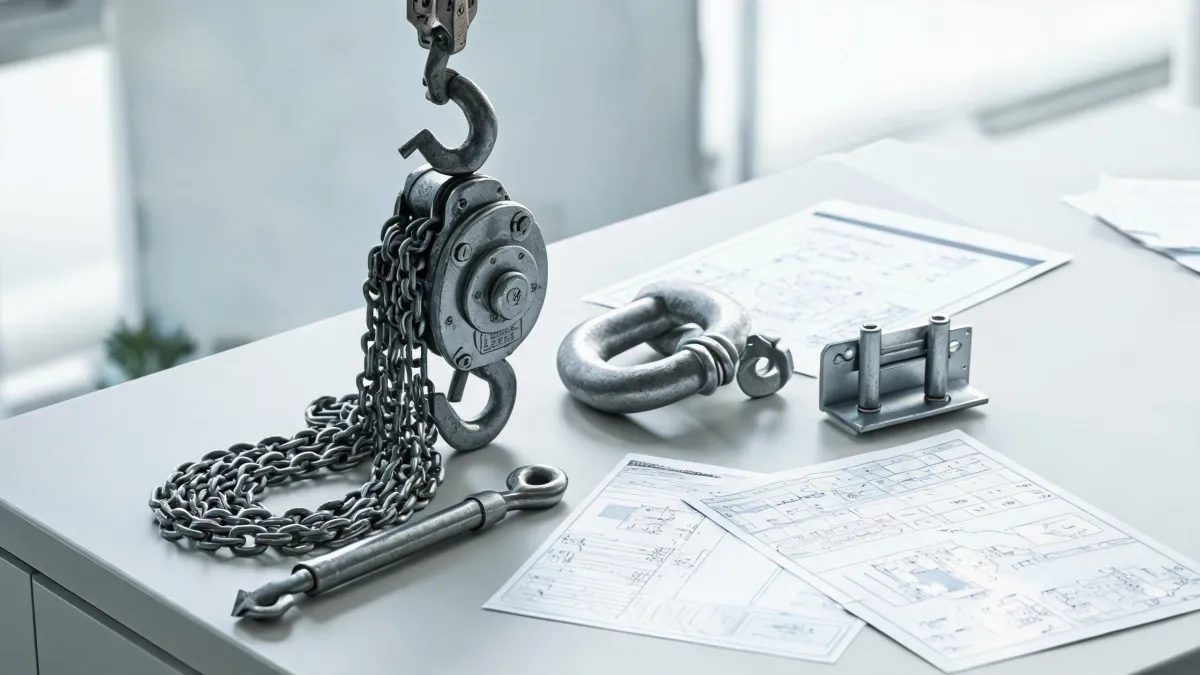
I coordinate rush orders for a living. Not the submit-by-noon kind. I mean equipment failures at 4:30 PM, delivery needed by 7 AM, and no room for excuses. In that world, one lesson keeps repeating: the option with the lowest sticker price is often the most expensive one on the calendar.
This is a comparison of two ways to buy industrial equipment. Option A: buy the cheapest thing that fits. Option B: buy the thing that keeps the operation running, with parts and documentation nearby. I am not going to tell you every budget product is garbage. That is not true. But when you are choosing a Harrington 2 ton chain hoist or a tow behind air compressor for sale, the equation looks different than it does for a one-time hand tool.
What I compare before anything else
The comparison is not brand X versus brand Y. It is price tag versus total cost. Three dimensions matter to me:
- Downtime cost. What does one waiting-day cost this operation?
- Documentation and parts access. Can we get a manual, a schematic, or a replacement seal on the day we need it?
- Component reliability. Will the regulator hold its setpoint? Will the valve move after it sits for a month?
Three things: downtime. Documentation. Reliability. In that order.
Dimension 1: The price of downtime
In March 2024, a packaging plant called at 2 PM. The main hoist had dropped its load at the end of a shift. No injury, but the line was stopped. They needed a replacement by Friday morning for a scheduled audit. Normal lead time for a quality unit? A week.
We found a distributor with a Harrington 2 ton chain hoist in stock, paid about $400 in rush freight, and had it on site by 7 AM. If I remember correctly, the premium was around $400, but don't quote me on the exact figure. The alternative was a no-brand chain hoist online for $240 less, arriving in four days. No phone support. No parts plan. No manual you could actually download.
Based on distributor price lists I checked in January 2025, a new 2-ton manual chain hoist from an established brand typically lists for two to three times a budget import. That gap feels big until you are standing in a plant at 2 PM with a stopped line.
What I mean is the purchase price is only the entry ticket. The real cost is the operation's ability to recover when something stops. The plant estimated lost production at roughly $4,000 per hour. A $240 saving against a possible $50,000 penalty clause is not a saving. It is a gamble.
(Should mention: the client had no 3-day buffer built into their plan. We changed that policy after the call.)
The surprise wasn't the quality difference. It was the infrastructure around the brand. A company with a customer portal and downloadable manuals made a 36-hour turnaround possible. The no-name unit didn't even have a support number.
Dimension 2: Documentation and parts access
This is where I sound like a broken record to buyers. If you specify a Harrington 2 ton chain hoist, create a Harrington login on the manufacturer's website before you need it—not after. It sounds trivial. It isn't. With a login, you can pull up the current manual, parts list, and serial-number-specific documentation in about two minutes. That can be the difference between a same-day fix and a four-day wait for a PDF from somebody's email account.
I learned that lesson in my first year. I made the classic beginner mistake: assuming standard meant the same thing to every equipment maker. I ordered a replacement hook block without checking the manual against the serial number. It did not fit. Cost me a $600 redo and a very quiet customer call. Now the first question is not price. It is: where is the manual?
This applies to compressors too. A tow behind air compressor for sale might look like a deal until you ask about the air compressor air regulator. What brand is it? Is a rebuild kit available? If the regulator is a generic unit with no label, you may be waiting 10 days for a part that should take one. To be fair, not every generic regulator is bad. But if the seller cannot tell you who made it, that is a red flag.
The surprising part, at least to me, was how much this matters in an emergency. I never expected documentation to become the deciding factor in a rush order. But it was. For hoists, ASME B30.16 establishes inspection and maintenance criteria. A brand that makes those records easy is worth something. How much? Enough that I have paid a premium to avoid the alternative.
Dimension 3: The small components that stop production
People don't call me when the air system is working. They call when output pressure drops at the worst moment, or when a valve sticks and shuts down a line.
A standard air compressor air regulator does two things: it controls downstream pressure and keeps it there. A cheap regulator might do both when it is new. Then, three months later, the setpoint starts drifting by 15-20 psi. For spray or blast work, that changes the finish. Rejected work, rework, overtime. The cost of the regulator disappears into the cost of wasted time.
We lost three hours overnight because a budget regulator drifted, and the operator did not catch it until half a part was re-blasted. The replacement regulator cost $70. The rework and overtime cost around $1,400. I would like to say that was the last time we used a mystery regulator. It was.
And then there's the question I hear more and more: How does a three way ball valve work? It's simple in principle. A ball valve uses a ball with a hole through it. Turn the handle, the hole aligns with the pipe, and flow passes. A three-way version uses a ball with a T-shaped or L-shaped passage and three ports. Rotating the ball connects one port to another, or in some designs, all three ports at once. That lets you switch airflow from one outlet to another, or isolate a component, without undoing fittings.
The principle is simple. The failure mode is not. A low-cost three-way valve can seize after a winter outdoors. I watched a handle snap before the ball moved on a tow behind air compressor. The operator could not switch from the primary tank to the backup tank. The job stopped.
I search 'tow behind air compressor for sale' often enough to know that budget units advertise a regulator and valve included. What that usually means is the least expensive regulator and valve the builder could source. Not ideal, but workable. If you buy one of those units, budget another $50-150 to replace the regulator and valve with parts from a company that has actual support.
Which one should you choose?
If you ask me, the answer depends on how far you are from the failure. Let's be practical.
- For a hoist used every shift: Choose the Harrington 2 ton chain hoist, set up a Harrington login, keep the manual on file, and buy parts before you need them. The extra cost is insurance, and insurance is cheaper than downtime.
- For a tow behind air compressor for sale: Compare the compressor price and the total support package. Ask about the regulator and valve brands. If they are generic, include a quality air compressor air regulator in your startup budget. Replace the cheap three-way valve before it becomes a mystery.
- For occasional use: If the equipment sits 10 days a month and downtime is not critical, a budget option can be fine. I still would not skip the manual, but I would not fight you on the price.
My view is simple: value is not the same as price. Paying for documentation, parts availability, and reliability is not being fancy. It is protecting the schedule.
Do you need the most expensive option? No. Do you need the option that leaves you with a plan when something fails? Yes. In my experience, that is the only option that has an acceptable price.

Maren Jorgensen
Maren Jorgensen is an independent hand tool and torque applications analyst covering wrenches, pliers, screwdrivers, hammers, sockets, ratchets, hex keys, and tool sets. She applies ISO 6789-1 torque-tool conformance principles while examining jaw capacity, leverage, fastener engagement, torque range, accuracy, handle geometry, and material hardness. Her practical guides help tradespeople and procurement teams select suitable tools, plan controlled tightening, and compare durability without relying on brand reputation alone.