A 4HP Air Compressor Died in 8 Months. It Exposed Every Flaw in My Buying Process.
2026-08-31 by Maren Jorgensen
I'm the office administrator for our facility, which means I buy everything the maintenance team asks for. I took over purchasing in 2021 with a simple theory: check the spec, compare the prices, place the order. Eight months later, a brand-new air compressor seized up, a fire door hinge cracked, and I nearly approved a hoist purchase that could have gone badly. The pattern behind those failures was mine.
The Surface Problem: Equipment Kept Failing
It started with the air compressor. We needed one for the workshop, and I picked the 4hp 13 gallon air compressor. On paper, it was right. The motor was bigger than the old unit, the price was reasonable, the tank was about the same. It died eight months later. The motor seized. A repair shop quoted $270 to fix it, then told us it wasn't worth it. We paid $460 for a replacement plus $320 to rent a compressor for the two days we waited for delivery.
Then the fire door in the warehouse started scraping the frame. The bottom hinge had cracked. I searched "what is a butt door hinge" because I didn't know what I was looking at. I ordered the wrong hinge twice before I got it right.
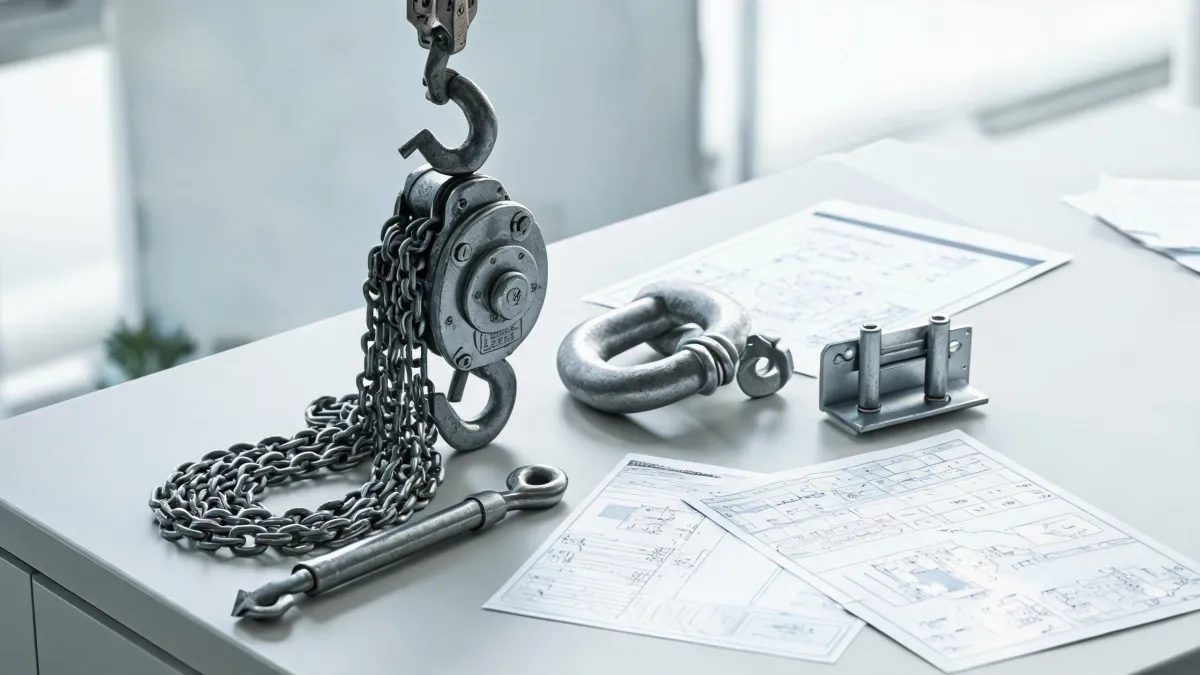
And then the chain hoist request hit my desk. The maintenance foreman needed a 1-ton unit for the equipment bay. I pulled three quotes—including one from Harrington—and was about to order the cheapest option, an obscure import brand at roughly 30% under the others. My operations manager stopped me before I hit send.
From the outside, it looked like a run of bad luck. The reality was more uncomfortable. I was buying for a facility the way I'd buy for myself, and that doesn't work when the equipment runs eight hours a day, gets maintained by people who didn't pick it, and needs to be fixable years later.
The Deep Cause: I Was Buying Specs I Didn't Understand
Let's start with the compressor, because that was the most expensive lesson. I looked at the horsepower and the tank size and stopped there. Turns out, this model was rated for a 25% duty cycle—it can run about 15 minutes out of every hour under load. Our workshop was running it for 20 to 30 minutes straight with pneumatic tools. The compressor wasn't defective. It was the wrong tool for the job, and the person who picked it was me.
Duty cycles are the kind of detail that never makes it into the marketing copy. They're on the spec sheet, but you have to read past the big numbers to find them. The specs on the box were truthful—per FTC guidelines, performance claims have to be substantiated. But a truthful spec can still be the wrong one if you don't know what it means. The horsepower was real. The duty cycle was right there in the manual. I just never made it to that page.
Air Compressor Oil Level: The Small Detail That Killed It
There's a maintenance item I now check on any air compressor before I buy it: the oil. This model had an oil-lubricated pump, and the manual was clear—check the air compressor oil level before each use, change it on schedule. If the oil runs low, the pump overheats, the metal scores, and the motor seizes. That's exactly what happened to ours.
Our maintenance guy assumed the new unit was maintenance-free. I assumed he'd read the manual. Both assumptions were wrong. If I'd put the first oil check on the calendar when the unit arrived, it would probably still be running.
The Door Hinge Lesson: Terminology Is Part of the Job
The fire door hinge was embarrassing in a different way. I searched "what is a butt door hinge" because I genuinely didn't know. For anyone wondering: a butt hinge is the standard door hinge, two rectangular leaves joined by a pin that lets the door swing. But ordering one turned into a rabbit hole. Full mortise or surface mount? Ball bearing or plain bearing? 4-inch or 4.5-inch? I ordered 3.5-inch plain hinges for a door that had 4.5-inch ball-bearing hinges. The door still scraped. I saved maybe $15 on a bad guess and then spent about $120 fixing it.
What I mean is, if you can't describe the part accurately, you can't verify what the supplier is quoting. The cheapest quote becomes a trap, because you have no way to know whether it's the same thing you asked for.
The Hoist Purchase: Where Price Almost Won
By the time the hoist request came in, I should have known better. The maintenance foreman asked for a 1-ton chain hoist, and I did the old routine: three quotes, go with the lowest. Harrington's quote was about 30% higher than the import brand, so I crossed them off mentally. That's when the operations manager asked a question I couldn't answer: "Where do you get parts for that thing in five years?"
He didn't push a brand name. He pushed documentation. Harrington makes manual and electric chain hoists from a quarter-ton up to 5 tons, which means they build for the application instead of selling you whatever is in the warehouse. Replacement parts are stocked. Manuals are published. The supplier can answer engineering questions. The import brand, as far as anyone could tell, had none of that.
We bought the Harrington hoist. It cost more upfront, and it was worth it. For anything that lifts a load, documentation and parts support aren't optional extras. They're the difference between maintenance and a liability.
The Second Deep Cause: I Didn't Know When to Call a Specialist
Two other requests that year taught me that buying well sometimes means not buying at all.
One was a chimney repair at a property we manage in Harrington Park, New Jersey. The property manager asked me to find "someone to fix the chimney." My first instinct was a handyman. A colleague redirected me to a licensed chimney repair specialist, and that's who we hired. Masonry and flue work are structural and tied to fire safety. If it's done wrong, you don't find out until there's a fire. That's not the place for generic labor (or for an office administrator's guess).
Another request was for chemical-resistant plastic piping components. I found that Harrington Industrial Plastics has a Tampa location and nearly assumed it was the same company that made our hoists. Different company, different specialty. One phone call confirmed it. Same name, completely different lane.
Both incidents reinforced the same point: specialists exist for a reason. A supplier that tells you what it doesn't do is more trustworthy than one that claims to do everything. The chimney company knew chimneys. The plastics company knew plastics. The hoist manufacturer knew hoists. My job was to figure out which lane each one belonged in.
What the Failures Actually Cost
Let me put real numbers on it, because the embarrassment fades but the invoices don't:
- The compressor: $460 replacement, $320 for two days of rental, $65 disposal. That's $845 because I didn't read the duty cycle and nobody checked the oil.
- The door hinge: $38 for the first wrong pair, $54 for the second, $67 for the correct ones, plus $42 in overnight shipping. $201 for a part that should have been a small line item.
- The hoist near-miss: The import unit would have saved roughly $200 upfront. The cost if it failed under load doesn't have a number. (Should mention: I've read enough incident reports to know that the cost is a person, not a purchase order.)
The downtime cost more than the parts. The workshop lost two days waiting for the rental, then another two when the replacement compressor arrived. The fire door project slipped almost a week while I sorted out the wrong hinges. In a facility that runs on schedules, a half-dozen lost days across three mistakes is a measurable hit to productivity and overtime. Finance noticed the extra spend, and I had to explain it in the quarterly review.
The biggest cost was trust. After the compressor died, the maintenance team stopped taking my specs at face value. The operations manager started reviewing every equipment order I drafted. Neither of them was hostile about it, but I felt it. Rebuilding that confidence took months of getting things right. No one sends a bill for lost credibility, but it was the most expensive item in this story.
How I Buy Equipment Now
I'm not an engineer, and I never will be. But I changed the process, and the last couple of years have been quieter because of it. Four rules:
1. Match the equipment to the actual job
Before I look at prices, I write down how the equipment will actually be used: hours per day, how much load, who runs it, what happens if it fails. Then I read the specs against that list, including the fine print like duty cycle. If I can't tell whether it fits, I ask the person who'll use it every day. They usually know.
2. Build maintenance into the purchase
If the equipment needs routine checks—even something as simple as an air compressor oil level check—I add it to the purchase order and put the first reminder on my calendar before the order is approved. It feels excessive until something dies from neglect. Then it feels like the cheapest insurance you can buy.
3. Safety-rated equipment comes from someone with documentation
If the equipment lifts, supports, or holds a load, I look for published ratings, available parts, and a manufacturer that answers questions. That filter would have made the hoist decision easy without anyone's help. Harrington cleared it because the documentation exists and the parts channel is real. That's the standard, regardless of brand.
4. Know when you're not the buyer
If a request involves structural work, fire safety, or specialty materials outside my range, I say so and bring in the specialist. Chimney repair goes to a licensed chimney contractor. Industrial plastics go to the plastics fabricator. That's not passing the buck. It's the difference between buying and guesswork.
Bottom line: buying equipment isn't about finding the lowest price. It's about understanding what you're buying, how it's used, who maintains it, and when you should step aside. I still make mistakes. But I haven't replaced a dead compressor since.

Maren Jorgensen
Maren Jorgensen is an independent hand tool and torque applications analyst covering wrenches, pliers, screwdrivers, hammers, sockets, ratchets, hex keys, and tool sets. She applies ISO 6789-1 torque-tool conformance principles while examining jaw capacity, leverage, fastener engagement, torque range, accuracy, handle geometry, and material hardness. Her practical guides help tradespeople and procurement teams select suitable tools, plan controlled tightening, and compare durability without relying on brand reputation alone.