Harrington Manual vs. Electric Chain Hoists: Which One Actually Costs Less?
2026-08-28 by Maren Jorgensen
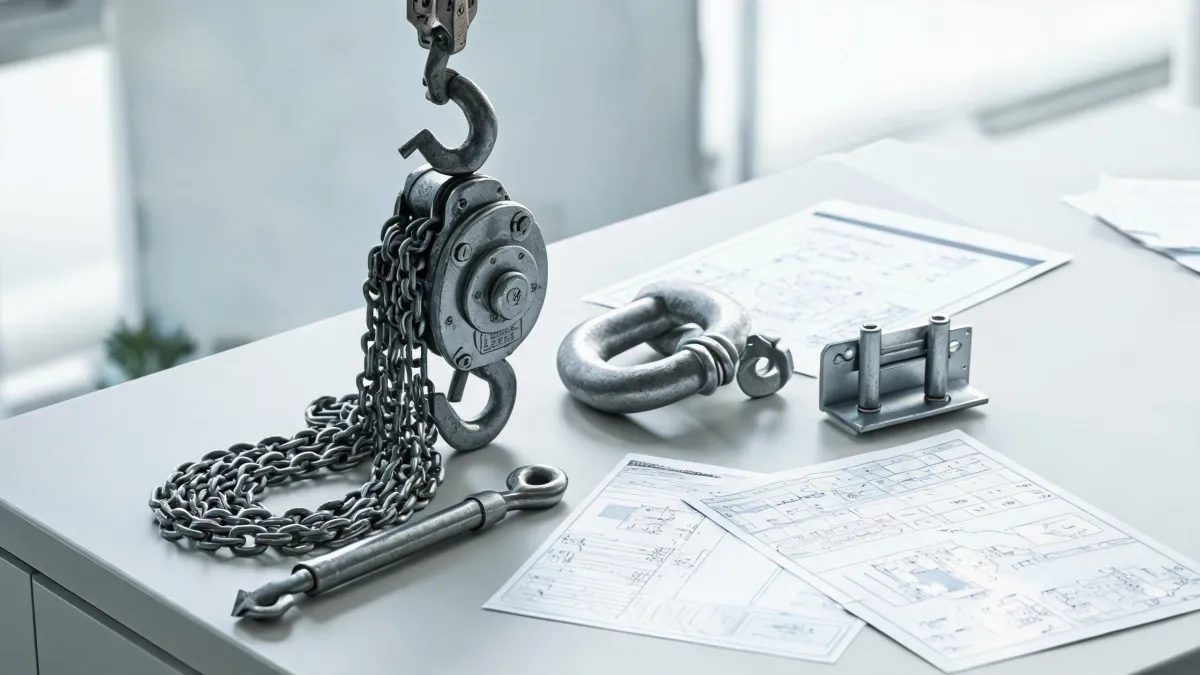
Which Harrington hoist should you buy—manual or electric? I hear that question constantly, and the answer doesn't start where most people expect.
I'm a quality and brand compliance manager at an industrial lifting equipment company. I review every hoist before it ships—roughly 800 units a year. I've rejected 3.5% of first deliveries in 2024 due to tolerance, finish, or documentation issues. And I help spec equipment for our own shop floor, which means I live with the consequences of every purchasing decision I make.
The standard way to compare hoists is spec sheet to spec sheet—capacity, lift height, speed, price. That's not the comparison I'm going to run here. Because in my experience, the hoist that looks cheaper on paper is frequently the one that costs more by the second year. Total cost of ownership matters more than the invoice.
So this isn't a "which is better" review. It's a breakdown of what each type actually costs you over the life of the equipment. Manual vs. electric. Four dimensions: price, maintenance, safety, and duty cycle.
Purchase Price vs. Total Cost of Ownership
The price gap is real. A Harrington manual chain hoist in the 1-ton range typically runs $350–$700 depending on lift height and configuration. A comparable Harrington electric chain hoist starts around $1,200 and climbs past $2,500 with longer lift, premium controls, or higher capacity. (Pricing based on publicly listed distributor quotes, January 2025. Verify current rates.)
That spread pushes buyers toward manual. I get it—$800 saved on paper feels like a win. But purchase price is the tip of the iceberg. Total cost of ownership includes installation, operator time per lift, maintenance intervals, safety risk, and the cost of downtime when something fails.
Here's the math that matters. Say a maintenance bay does eight lifts per shift, each taking two minutes longer with a manual hoist because of pulling effort and setup. That's 16 minutes per shift. Over 240 working days per year, that's 64 hours of lost labor. At a fully loaded rate of $35/hour, manual operation costs $2,240 a year in extra time alone. The $800 purchase-price advantage evaporates within five months.
So the conclusion contradicts the instinct: for steady use, electric wins on total cost. For occasional use, manual wins. The gray zone in between—roughly 5–10 lifts per day—is where most people make the wrong call.
Maintenance and Reliability
Here's a surprise: manual hoists aren't actually lower-maintenance. They're just quieter about their problems.
A manual chain hoist is simple—chain, sprocket, brake, hooks. Fewer parts mean fewer checklist items. But the failure modes are insidious. Chain elongation beyond safe limits, brake contamination, hook deformation—none of these announce themselves. By the time they show up in a visual inspection, the unit has often been working at reduced safety margins for weeks.
In our Q1 2024 audit, we examined 210 manual hoists returned for service over two years. Chain wear past 4% elongation was the most common issue, followed by brake slipping and hook stretch. Not one of those was detectable from external inspection without disassembly. Quiet problems. I do not say that to scare you—I say it because inspection protocols matter.
Electric hoists carry more components—motor, gearbox, contactor, limit switches, brake valve assembly. More to inspect, yes. But they also include overload protection and limit switches as standard. Features that manual units simply don't have.
Take the brake valve. On a Harrington electric hoist, the valve meters brake release as power engages and disengages. If the clearance drifts out of spec, you can get load drift under hook. In September 2024, we caught a unit where the Harrington valve clearance was 0.5mm out of spec. It passed a static load test but settled 2 inches after 10 minutes under load. That's the kind of defect that creates $22,000 in rework and missed deadlines—not an $80 parts bill.
So where does that leave us? Manual hoists don't win on maintenance; they defer the risk. If you run a disciplined annual inspection program, either type works. But electric units give you earlier warnings before a failure becomes dangerous.
Safety and Compliance
ASME B30.16 governs overhead hoist design. OSHA 1910.179 governs their use. Both are baseline minimums, not best practices.
Per OSHA 1910.179, overhead hoists in regular service must be inspected monthly by a competent person, with a documented annual inspection by a qualified individual. These aren't suggestions—they're requirements.
The safety gap between manual and electric comes down to operator exposure and overload response. A manual hoist asks the operator to stand close to the load path, pull the chain, and judge the load by feel. That works for occasional lifts. For daily production, that's an ergonomic injury waiting to happen.
And there's the overload problem. On a manual hoist, the operator is the overload sensor. Push hard enough and the brake slips—or the chain stretches. On a Harrington electric hoist, overload protection cuts the motor before the load exceeds rating.
One more point: choose capacity with margin. Our product line goes from 1/4 ton to 5 tons intentionally. If you're regularly near 80% of rated capacity, step up a size. The rated number assumes dynamic forces, and real-world loads exceed static weights.
I rejected a batch of 80 hoist chains once because they measured within industry tolerance but outside our specified tolerance for elongation. The vendor called the rejection "overly strict." We disagreed. The chains went back. On safety-critical components, spec tolerance exists to prevent edge-case failures, not to process the 99% that work fine.
Duty Cycle and Application Fit
This is where buyers get confused most often.
"We only use it occasionally." Then we measure, and it's 14 lifts a day. That's not occasional. That's light production, and manual hoists are the wrong tool for it.
Here's a hard-won finding: when we surveyed our own technicians, they preferred electric hoists across the board. I expected veterans to favor manual—the tactile feedback, the mechanical control. Wrong. They said electric made their work less physically punishing. That surprised me, and I had to change my assumption.
A useful rule of thumb: fewer than 5 lifts per day means manual is likely the better buy. More than 10 means electric. Between 5 and 10, measure your actual usage patterns before deciding.
Choosing the Right Harrington Hoist for Your Operation
Here's the practical breakdown, minus the sales pressure.
Pick a manual Harrington chain hoist when:
- You're doing fewer than 5–10 lifts per day
- The hoist moves between work areas or job sites
- There's no reliable power source at the lifting point
- Budget genuinely can't stretch to an electric unit
Pick an electric Harrington chain hoist when:
- Lifting happens several times daily, every day
- Loads regularly approach 50–80% of capacity
- Operators are working overhead and need to stand clear
- Cycle time and productivity affect downstream operations
One more note: Harrington hoists are primarily sold through industrial distributors—not retail outlets. You won't find a 5-ton electric chain hoist sitting on the shelf at your local Ace Hardware in Harrington, Delaware. What you will find at a legitimate distributor is the full product line, the original manuals, and replacement parts that fit without modification. Buy from a channel that gives you those things.
And consider the middle path: many shops run an electric unit for daily work and keep a manual hoist as a portable backup. That's a solid arrangement.
The Same TCO Lesson Shows Up Everywhere
This pattern repeats across every equipment category I've ever evaluated.
Take air compressors. Someone buys a pull-behind air compressor because the label price undercuts a stationary unit. Then they hit the duty cycle limit—a portable unit might only deliver 40% duty cycle, which means it can't run a sandblaster continuously. And the air compressor accessories—dryers, filters, hose reels—quietly add 15–30% to the real total cost.
Welding is the same story. When someone asks what welding wire to use without gas, the typical answer is self-shielded flux-cored wire. It works outdoors where shielding gas blows away. But flux-core has different fume characteristics, different penetration, and different cleanup requirements than solid wire with shielding gas. There's no free lunch—only trade-offs.
Hoists follow the same logic. The label price is the start, not the answer.
Whatever you decide, run the numbers honestly. Count operator hours, count maintenance events, count safety risk, and multiply across the life of the machine. That's the only comparison that matters.
And if you pick electric and spend the first few weeks second-guessing the decision? I know the feeling. When we installed our first electric hoist, I checked the inspection log every day. Didn't relax until the 500-hour service came back clean. That's not anxiety; that's just paying attention.

Maren Jorgensen
Maren Jorgensen is an independent hand tool and torque applications analyst covering wrenches, pliers, screwdrivers, hammers, sockets, ratchets, hex keys, and tool sets. She applies ISO 6789-1 torque-tool conformance principles while examining jaw capacity, leverage, fastener engagement, torque range, accuracy, handle geometry, and material hardness. Her practical guides help tradespeople and procurement teams select suitable tools, plan controlled tightening, and compare durability without relying on brand reputation alone.