Emergency MRO Procurement: The Checklist for Critical Repairs
2026-08-21 by Maren Jorgensen
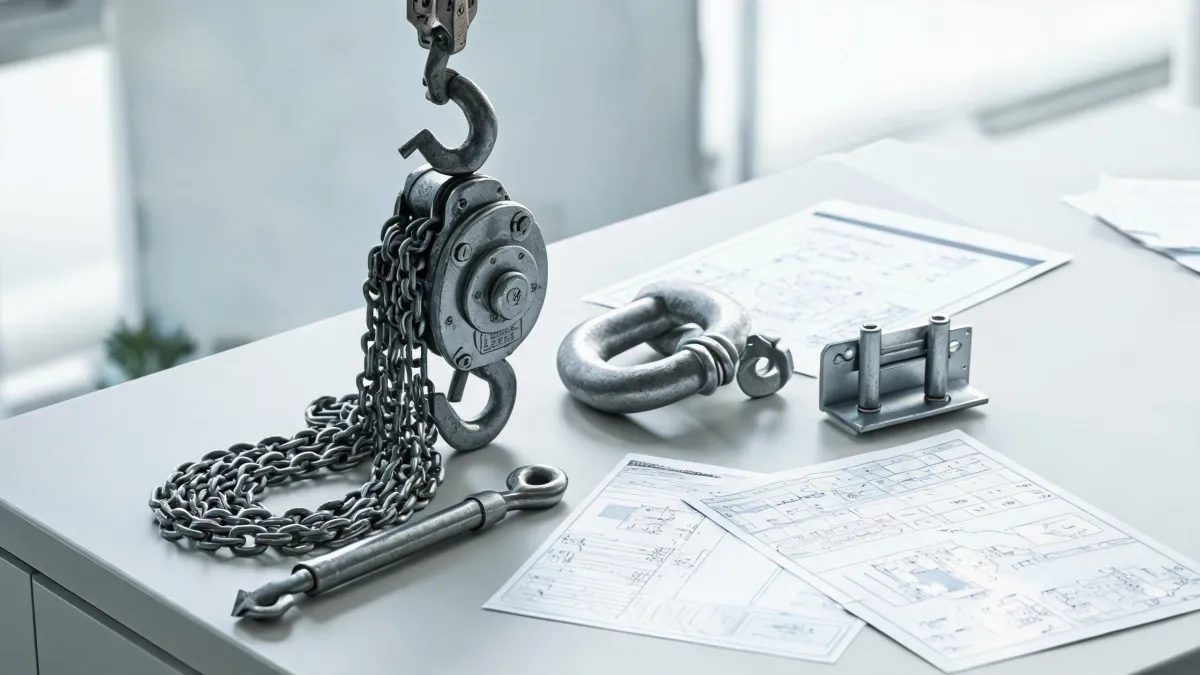
It's 2:00 AM. Your lead maintenance tech just called. The 2-ton hoist on Line 3 is seized, a subcontractor ran out of gas for his nail gun on the 14th floor, and the overnight crew just reported a submersible pump short-cycled and burned itself out. Normal lead times don't matter anymore. The shift starts at 6:00 AM.
In my role coordinating MRO (maintenance, repair, and operations) procurement for industrial facilities and contractors, I've lived this scenario more times than I can count. I've coordinated 200+ rush orders over the last seven years, including same-day turnarounds for food processing plants and emergency parts for construction crews. This is the checklist I use when the clock is ticking against us.
Step 1: Diagnose the Root Cause (Don't Just Order Parts)
When the pressure is on, the instinct is to order the obvious component and get it shipped. This is a mistake.
Take the submersible pump. If you're replacing it, you might wonder, "Does a submersible pump have a check valve?" The answer usually is yes, or it needs one inline. If you skip that check and just order the pump, you'll be back down the manhole in a week. The water column slams back on the impeller, strips the gears, and burns out the motor. I've seen this exact scenario turn a $400 pump replacement into a $1,900 project.
The fix: Before you call a supplier, take 15 minutes to trace the entire failure path. Is the hoist motor burned out, or is it a blown limit switch? Is the nail gun not firing due to empty gas, or is the o-ring on the cartridge dry-rotted? Half of my rush orders are solved by a $3 part, not a $300 assembly.
Step 2: Find the Manual and Verify Specs
I still kick myself for the time we ordered a new load chain for a Harrington hoist without checking the manual. In our defense, it was an aggressive deadline. But skipping the spec check created a 36-hour delay. The chain pitch was wrong. If you're searching for the harrington 2 ton chain hoist manual, here's the trick: you're not just looking for the lift capacity. You're looking for the chain pitch, the load hook dimensions, and the part numbers for the exact brake kit or limit switch assembly.
The fix: Keep a hard copy or a PDF bookmark of the manual for every critical asset. When an emergency hits, grab the serial number and the manual. It takes 10 minutes to verify the specs. It takes 3 days to return the wrong part and order the right one.
Step 3: Vet Your Vendors Ruthlessly
When you search for "air compressor dealers near me" or "harrington industrial plastics" suppliers, it's tempting to pick the closest location or the cheapest quote. My experience: that's exactly how you lose money.
In my experience managing 200+ rush orders, the lowest quote has cost us more in about 60% of cases. Why? Because a cheap vendor doesn't have the inventory depth. They can get you a compressor, but can they get you the specific unloader valve or the right air-end oil today? The "budget" option looked smart until the part didn't fit and we missed a $50,000 penalty clause on a construction deadline.
The fix: Build a shortlist of vendors who have done this before. A true emergency supplier isn't just a storefront with a truck. They're the distributor who has a rack of Harrington hoists, a full line of industrial plastics, and a tech on staff who knows what a C-face mount is. That relationship is worth more than the 10% you save with a discount vendor.
Step 4: Do the Total Cost Math (Rush Fees vs. Downtime)
I have mixed feelings about rush fees. On one hand, they feel like a penalty. On the other hand, I've seen the operational chaos an unscheduled shutdown causes. The math is actually pretty simple; you just have to be honest about your downtime cost.
Let's say standard ground shipping on a hoist part costs $30 and takes 5 days. Next-day air costs $90 and takes 1 day. A lot of procurement managers would see that $60 difference and pick ground shipping to save money. But if your line is down, what does it cost per hour? If it's a $10,000/day production line, that's $416 per hour. Paying $60 extra to save 4 days is a no-brainer.
The fix: Calculate your cost per hour of downtime. Then, add the rush fee to the base cost and compare it to the cost of waiting. Make the decision based on the total impact, not just the parts invoice.
Step 5: Install, Test, and Document
The delivery arrived. The panic is over, right? Not yet. This is where the second wave of problems usually starts.
For the hoist, install the chain and test it under no load first. Then test it under a rated load. Verify the brake holds before you put it back into production. For a nail gun, purge the line and check for leaks. And for the submersible pump—install the check valve correctly. If you're asking, "Does a submersible pump have a check valve?" again, the answer is yes. Put it at the pump discharge or use the built-in one and verify it's seating properly.
Critical Pitfalls That Will Burn You
Here are the hard lessons from dozens of emergency calls that still sting when I think about them:
- Don't ignore the small parts. I once saved $40 on a gasket and spent $600 on shipping and labor to install it twice when it leaked. The gasket was 10% of the cost of the pump rebuild, but it caused 100% of the second failure.
- Don't assume the part is compatible. Even if it looks right, check the manual. "The chain looked exactly the same" is a sentence I've heard right before a hoist dropped a load and failed a safety inspection.
- Don't use a generic part for a critical safety device. This goes for hoist brakes, load pins, and check valves. The slightly cheaper generic option isn't worth the liability.
Bottom line: We can't predict when a pump will seize or a hoist will lock up, but we can control how we respond. The checklist is straightforward: diagnose the actual root cause, verify the specs against the manual, vet your vendors for inventory depth, do the total cost math, and always test before trusting the repair.
In March 2024, a client called at 4:00 PM with a hoist down and a mandatory audit at 9:00 AM the next morning. Normal turnaround was 3 days. We found a vendor with the correct brake assembly in stock, paid $80 extra in rush fees (on top of the $150 base cost), and delivered it by 7:00 AM. The client's alternative was failing the audit and losing a $200,000 contract. That $80 was the best money they ever spent.

Maren Jorgensen
Maren Jorgensen is an independent hand tool and torque applications analyst covering wrenches, pliers, screwdrivers, hammers, sockets, ratchets, hex keys, and tool sets. She applies ISO 6789-1 torque-tool conformance principles while examining jaw capacity, leverage, fastener engagement, torque range, accuracy, handle geometry, and material hardness. Her practical guides help tradespeople and procurement teams select suitable tools, plan controlled tightening, and compare durability without relying on brand reputation alone.