1 Ton Harrington Chain Hoist: The Total Cost Breakdown Most Buyers Skip
2026-08-21 by Maren Jorgensen
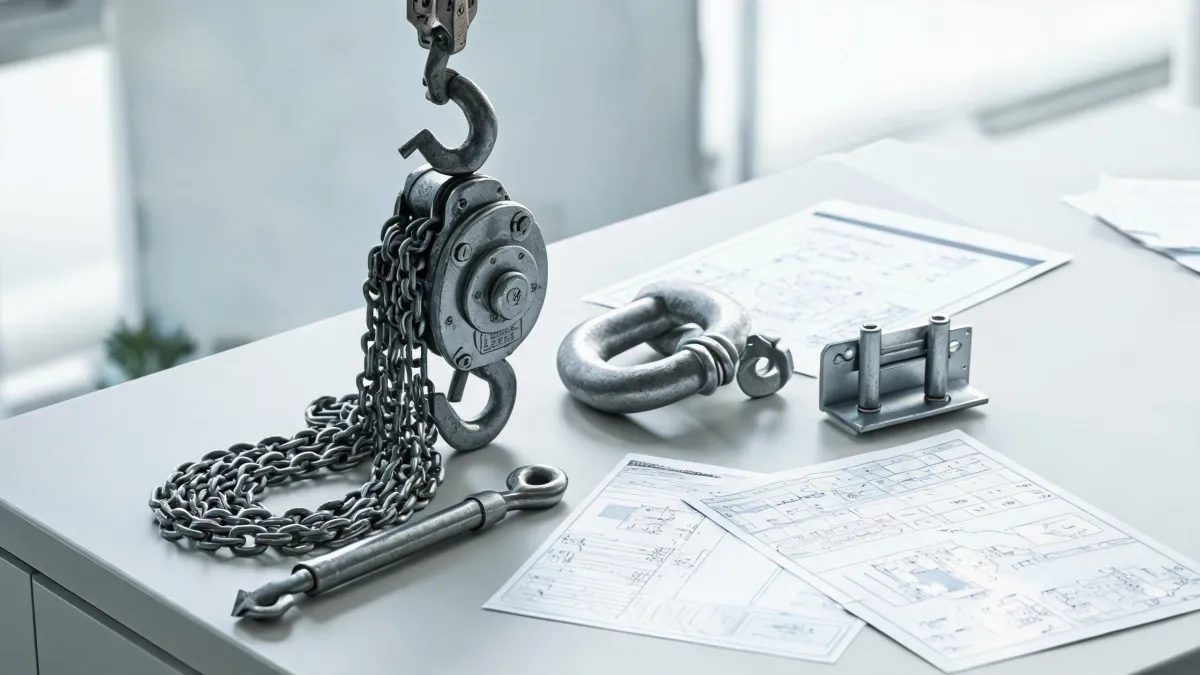
After six years of tracking every equipment purchase in our shop, I can tell you this: the cheapest 1 ton chain hoist you can buy will end up costing more than a 1 ton Harrington chain hoist by the end of year two. The initial price difference evaporates the first time you need a replacement part and find it back-ordered for weeks.
I'm the procurement manager at a 140-person metal fabrication shop in the Midwest. I manage roughly $420,000 in annual equipment and tooling spend, and I've documented every order in our cost tracking system since 2019. I've compared hoists across eight different vendors over the past six years, and I've got the invoices, downtime logs, and repair history to back that up.
Most Buyers Compare the Wrong Numbers
Everyone asks "what's your best price on a 1 ton chain hoist?" The question they should be asking is "what does this hoist cost to own over the next five years?" In the data I've collected, the purchase price is usually less than half of what a hoist actually costs over its working life. The rest comes from maintenance, replacement parts, downtime, and labor hours spent on equipment that isn't properly documented or supported.
That's where Harrington separates itself. Not because the initial quote is the lowest—it usually isn't. But because the total cost of ownership trends lower once you account for parts availability, manual quality, and duty cycle. Those are the three factors most buyers ignore.
The Failure That Changed How I Buy Hoists
The vendor failure in March 2023 changed how I think about hoist procurement. We had a budget-priced hoist on a production line and the brake assembly seized mid-lift. The load dropped about four inches before the emergency brake caught it. Nobody got hurt, but we shut the line down for six hours while an outside tech came in. That shutdown cost roughly $2,800 in lost production. The hoist itself had saved us about $180 compared to a Harrington at purchase time.
I still kick myself for not seeing the signs. The documentation that came with the cheap unit was a single folded sheet—no torque specs, no parts breakdown, no lubrication schedule. The Harrington units in our shop came with an actual manual: exploded parts diagrams, torque values, maintenance intervals. That documentation gap isn't a nice-to-have. It's the difference between your maintenance team fixing something in an afternoon and paying an outside tech $175 an hour to figure it out.
What I Actually Compare When Evaluating a 1 Ton Hoist
Since that failure, I've built a comparison framework that goes beyond the quote. Here's what I evaluate:
1. Parts Availability
If I need a brake assembly or a chain guide, how fast can I get it? I've ordered enough hoist parts to know that "available" can mean two days or two weeks depending on the brand. Harrington's parts distribution has been consistently 2-5 days for the items I've ordered (as of January 2025, at least—worth confirming current lead times if you're reading this later). When a hoist is down, that difference matters far more than the original price.
2. Documentation Quality
This is the most overlooked factor. A real manual tells you the torque spec for every bolt, how to adjust the brake when it starts slipping, and what lubrication schedule to follow. That information turns a $400 service call into a $40 in-house fix. Every Harrington hoist we've bought came with a proper manual. Not all brands do.
3. Duty Cycle
Most buyers focus on rated load and completely miss duty cycle—how often you can run the hoist at that load without overheating or accelerating wear. A 1 ton hoist isn't just a 1 ton hoist. If you need continuous operation, check the duty cycle rating against how you'll actually use it. If you're unsure, ASME B30.16 defines the service classes for overhead hoists—worth reading before you buy.
4. The Real Total Cost
In 2023, I compared quotes from four vendors for a replacement hoist. One vendor quoted $485 all-in. Another quoted $419, but the fine print added $65 in freight and a $35 handling fee, bringing the actual total to $519. A 17% difference hidden in line items. And I almost signed the lower quote before I caught it.
That same thinking applies to the hoist itself. A cheap unit can look right in the purchasing spreadsheet, but the first time it goes down and the parts aren't available, the downtime cost will wipe out any savings.
One Year of Side-by-Side Data
When I compared our two most-used 1 ton units side by side—one Harrington, one budget brand—over a full year of operation, I finally understood why the details matter. The budget unit spent a total of 11 days out of service across three repair events. The Harrington spent zero days down in the same period, with only routine preventive maintenance performed by our own techs.
Eleven days of downtime on one production line is about $5,000 in lost labor and output at our scale. That's more than the purchase price of two 1 ton Harrington chain hoists. The initial savings on the budget unit didn't just disappear—they became a negative number.
When the 1 Ton Harrington Chain Hoist Isn't the Right Choice
I'm not here to tell you every hoist in your facility should be a Harrington. A cost-conscious buyer should hear the exceptions.
If you need a hoist for occasional maintenance work—a few lifts a week, not continuous operation—a lighter-duty unit may serve you fine. The duty cycle gap won't hurt you if you're barely working the hoist.
If you need electric operation with variable speed or remote control, that's a different product category with different pricing and specs. The 1 ton Harrington electric chain hoist is a solid option, but it's not the same decision as a manual unit.
And if your maintenance team is comfortable working on any brand, the documentation advantage narrows. A strong in-house team can work around thin manuals and longer lead times. Most facilities I've seen don't have that capability, including ours.
One final caveat: pricing and lead times change. I'm working from publicly listed prices and my own order history as of January 2025. Run your own numbers, check current lead times, and make the call based on your data—that's the whole point.

Maren Jorgensen
Maren Jorgensen is an independent hand tool and torque applications analyst covering wrenches, pliers, screwdrivers, hammers, sockets, ratchets, hex keys, and tool sets. She applies ISO 6789-1 torque-tool conformance principles while examining jaw capacity, leverage, fastener engagement, torque range, accuracy, handle geometry, and material hardness. Her practical guides help tradespeople and procurement teams select suitable tools, plan controlled tightening, and compare durability without relying on brand reputation alone.