Harrington Chain Hoist 1-2 Ton: Manual vs Electric for Emergency Replacements
2026-08-24 by Maren Jorgensen
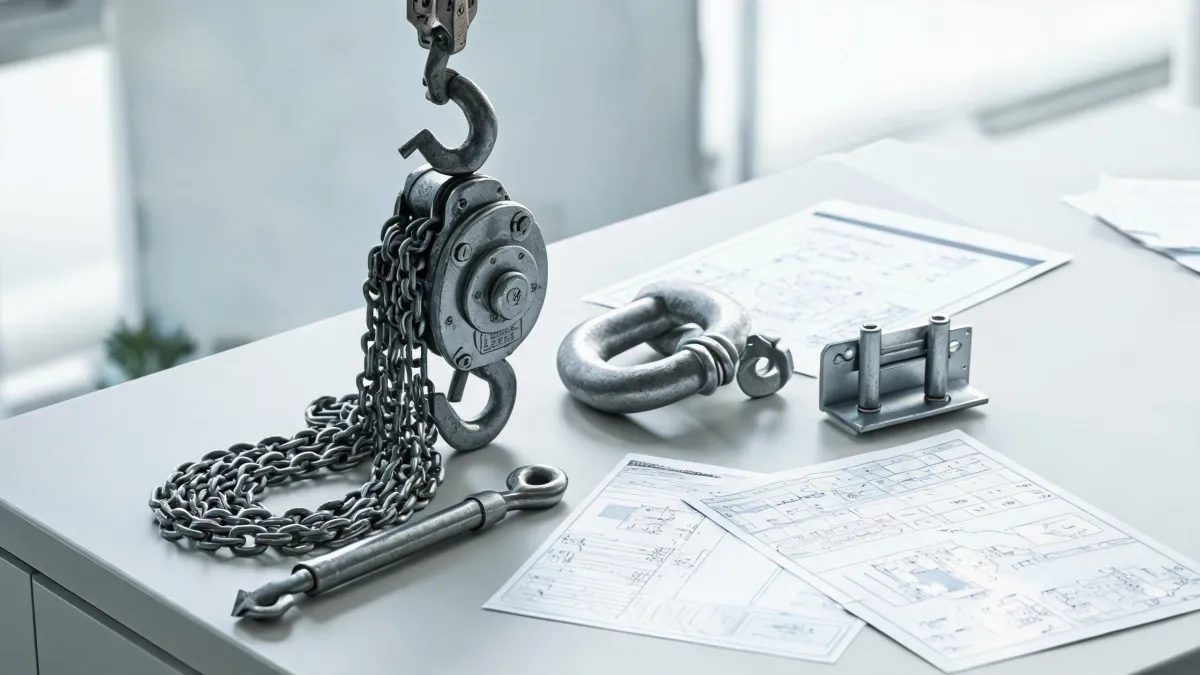
If you run a facility that lifts anything heavier than a toolbox, you already know the feeling: a hoist jams, a motor burns out, or a load has to come down before the next shift starts. In my role coordinating emergency equipment replacements for industrial customers, I've watched teams lose hours debating the wrong question. They ask "which model do I buy" when the real question is "can I be back up and running before my crew runs out of daylight?"
Usually the answer is a Harrington chain hoist. The specific fork in the road is a 1-2 ton manual chain hoist vs a 1-2 ton electric chain hoist. I've compared these two in rush situations across roughly 200 orders, and the right choice usually comes down to four things: deployment speed, load control, maintenance, and total cost.
A Quick Ground Rule: The Harrington 1-2 Ton Line
Harrington's hoist line runs from 1/4 ton to 5 ton, but the sizes that matter in most plants are 1 ton and 2 tons. Those two capacities cover pumps, motors, gearboxes, rolls, and fixtures. You can buy both as manual and electric units, and both have the same kind of manufacturer support behind them.
That support matters in an emergency. If we send you a replacement hoist and you can't get a manual or a replacement part, that's not a quick fix. That's a future emergency.
Deployment Speed: When Minutes Matter
If a load is stuck or a piece of equipment is already down, speed is the first filter. Here's the counterintuitive part: a manual Harrington chain hoist is usually faster to get into service than an electric one.
The manual version doesn't need a power connection. No cable, no outlet, no pendant station. One person can hook it to the beam, pull the hand chain tight, and take up the load. In March 2024, a client called us 36 hours before a planned outage. They needed a 1-ton manual hoist to replace a failed pump motor. We delivered in time for their crew to rig it. The lead said, "We had it out of the crate and hanging in about 20 minutes." If I had pushed them toward an electric unit, they would have spent extra time finding an electrician or a compatible receptacle.
Electric hoists look faster on paper because the lift speed is higher. In a facility where the wiring is already set up, that's true: you connect it and go. But in a temporary setup, an outdoor location, or a facility built before electric hoist wiring was common, the power requirement turns into its own project.
Load Control and Installation: Feel vs. Speed
Once the load is on the hook, the manual hoist's big advantage becomes feel. When you pull the hand chain, you can feel resistance and make small adjustments. That tactile feedback matters when you're aligning a pump flange or seating a heavy fixture. With a manual hoist, you can move in quarter-inch steps without jumping.
Electric hoists are faster for repeated lifting. But speed doesn't automatically mean precision. Controlling an electric hoist with a pendant takes practice, especially if you're using jog buttons. If the task is a one-time, tricky removal, the manual version is more forgiving.
Installation direction matters too. I get asked, "can a double check valve be installed vertically?" The short answer is yes, if the manufacturer allows vertical installation and the flow direction is upward. That question is a good reminder that direction often determines whether a component works correctly. Same with hoists. A manual hoist is designed to hang vertically. If you turn it into a horizontal puller, you change the friction on the chain and can overload the sprocket. An electric chain hoist is usually suspended from a lug or a trolley. Before you decide between manual and electric, verify your beam, headroom, and load path. Don't just compare specs.
Maintenance, Parts, and Total Cost: Where They Diverge
Manual Harrington hoists are simpler. Wear points are the chain, hooks, brake, and gear assembly. Most of these can be checked visually or with a simple disassembly. Keep the chain clean and lubricated, replace worn hooks, and a manual hoist will last for years.
Electric hoists have more components: motor, brake, contactors, limit switches, control stations, and cable. Each one is a possible failure point. Running an electric hoist means having someone who understands the electrical side. That's not impossible, but it adds to the total cost.
One point that doesn't get enough attention is materials. Harrington industrial plastics are used in hoist parts like control housings and chain guides. They keep the weight down and resist rust. But that only works when you use the right replacement parts. We've seen "compatible" plastic housings from aftermarket sellers fail within a few months. Buying the correct part the first time is actually faster.
And don't skip the paperwork. A worker might study an electric screwdriver manual to set a clutch correctly, then guess at a hoist brake adjustment. That's backwards. Manual and electric Harrington hoists come with instructions and a parts list. Store them, or scan the spec pages. When the clock is tight, the answer for torque specs or chain size should be right there, not buried in an old email.
Which One Should You Buy for 1-2 Ton Work?
If you run a small shop or a growing contracting business, a manual Harrington hoist is a reasonable default. Purchase cost is lower. You don't need electrical infrastructure. It travels with you. I've seen vendors treat small buyers poorly, and it never made sense to me. A small order today can become a bigger order tomorrow. The vendors who took our first small orders seriously are the ones we called back.
For crews that already carry portable power tools, that idea hits home. If you're carrying an MS 462 C-M gas chainsaw, you know the value of showing up without depending on a generator. A 1-2 ton manual hoist works in the same spirit: it needs a beam and two hands, and nothing else.
Choose an electric Harrington hoist when the work is repetitive. If you're lifting dies or barrels several times an hour, or if the hoist is fixed at one workstation, electric speed reduces fatigue and cycle time. For that pattern, the extra cost is justified by productivity.
Final Thought: What Actually Matters in an Emergency Purchase
Our team processed 47 rush orders in a single quarter with a 95% on-time rate. That experience pushed me toward certainty over the cheapest quote. I once watched a contract get lost because someone tried to save money on standard shipping instead of paying for an expedited delivery. The policy changed after that.
If you need a 1-2 ton hoist today, starting with a Harrington manual unit is a proven move. It's easier to deploy, easier to diagnose, and has fewer things to go wrong than an electric model. If your production grows, you can add an electric unit later and keep the same support structure. Don't worry about making the perfect long-term choice. Worry about getting the right capacity, the right suspension, and the right support for the work you're doing now.

Maren Jorgensen
Maren Jorgensen is an independent hand tool and torque applications analyst covering wrenches, pliers, screwdrivers, hammers, sockets, ratchets, hex keys, and tool sets. She applies ISO 6789-1 torque-tool conformance principles while examining jaw capacity, leverage, fastener engagement, torque range, accuracy, handle geometry, and material hardness. Her practical guides help tradespeople and procurement teams select suitable tools, plan controlled tightening, and compare durability without relying on brand reputation alone.