Manual vs. Electric Harrington Chain Hoists: What $18,000 in Mistakes Taught Me
2026-08-18 by Maren Jorgensen
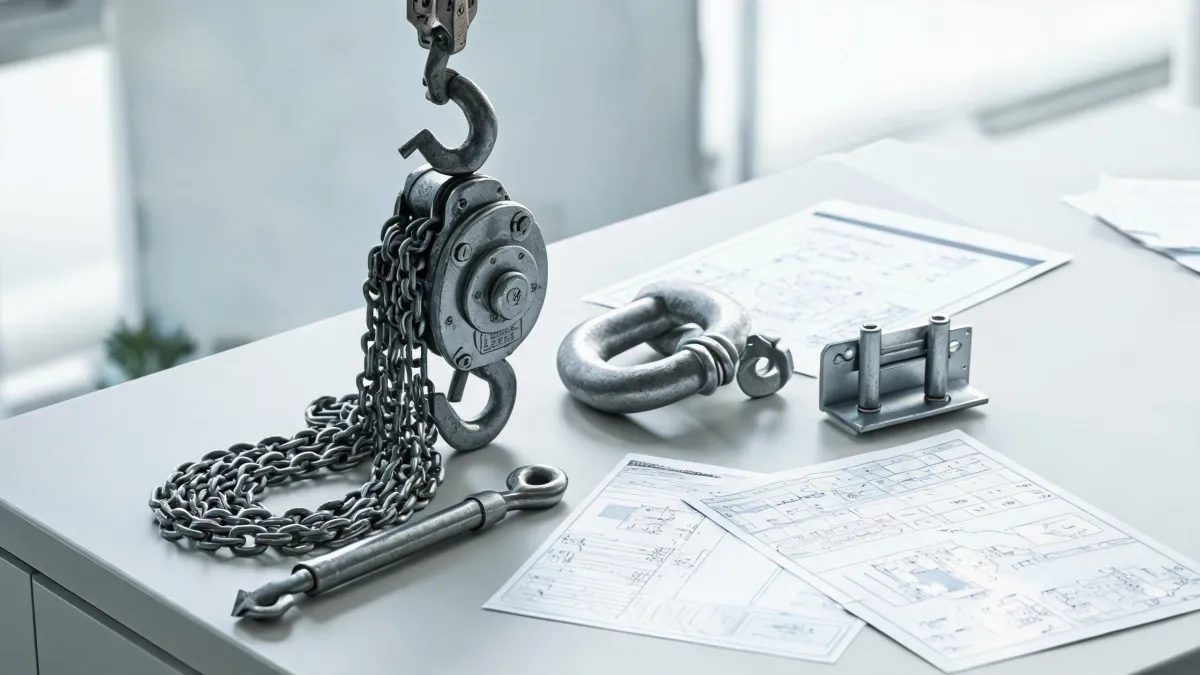
I've been specifying and installing lifting equipment for nine years. In that time, I've personally made — and documented — 14 significant mistakes, totaling roughly $18,000 in wasted budget. Now I maintain our team's checklist so the next person doesn't have to learn the same lessons.
The question I get asked most often is simple: manual or electric Harrington chain hoist?
But it's not a simple question. In September 2022, I approved a $3,200 electric hoist for a job that needed precise load positioning. The hoist was perfect on paper. But its variable speed control was too aggressive at the low end, and we damaged the load on the second lift. That mistake cost $890 in rework plus a 1-week delay.
That's when I stopped thinking "electric vs. manual" and started comparing hoists across four dimensions. Here's how I think about the choice now.
The Framework I Use Now
When I started in 2017, I believed electric was always better because it's faster. Everything I'd read said the same. My experience with 200+ installations has changed my mind.
Instead of asking "which is better," I ask four questions:
- Installation and anchoring: where most of my own mistakes happened
- Load control and precision: the dimension with the biggest surprise
- Maintenance and long-term reliability: where "simpler" doesn't always win
- Total cost over 5 years: where the math flips depending on usage
Each dimension produced a clear winner in my experience — but not always the winner I expected.
Installation and Anchoring
My first significant mistake happened in 2017. I ordered a 1-ton Harrington electric chain hoist and assumed the existing beam mount would handle it. I didn't inspect the anchor points. We used standard hardware instead of wedge anchor bolts rated for the working load limit.
A structural engineer caught it during a routine inspection two months later. We had to strip the entire mounting system and redo it. The redo ran $1,400 and cost a week of production downtime.
Here's the checklist I use now, every time:
- Wedge anchor bolts rated for the working load limit — never "close enough"
- Beam flange thickness matched to the trolley or clamp specifications
- Concrete condition verified when anchoring into a slab — cracks and spalling change load ratings
- Torque values documented and signed off
Manual vs. electric on this dimension? They're similar. But manual hoists create a specific trap: they're light and portable, so crews treat them like temporary equipment. Temporary usually means sloppy. I reviewed a 14-point installation once where every anchor point was undersized. We caught it before a load was hung — which was luck, not skill.
Load Control and Precision
Everything I'd read about electric hoists said they offer better control. My experience suggests otherwise.
With a manual chain hoist, you feel the load: the chain binding, the load starting to swing, the tension changing. With an electric hoist, you're pushing a button and watching from a distance. That's fine for simple lifts. It's risky for precise placement.
I didn't fully understand this until March 2023. We were using a Harrington electric chain hoist to position a 400-pound duct section into a tight vertical shaft on an air duct repair job. The hoist's lowest speed was still too fast for the final two inches of seating. After two attempts, the crew switched to a manual Harrington chain hoist we'd brought as backup. It took 20 extra minutes, but the duct seated perfectly on the first try.
If your work requires precise placement — seating flanges, aligning bolt holes, positioning loads in tight spaces — a manual hoist gives you tactile feedback that electric can't match.
Maintenance and Lifecycle Reliability
I used to think manual hoists were more reliable because they have fewer parts and fewer failure modes. That's mechanically true. But there's another failure mode I didn't account for: operator fatigue.
Consider a facility running an industrial screw compressor system that supplies plant air. The maintenance crew uses hoists constantly to service compressor valves, motors, and piping. Crank a 2-ton manual hoist all day, and operators get tired. Tired operators make mistakes that cost more than any gearbox replacement.
Electric hoists fix the fatigue problem but introduce maintenance discipline: motors need inspection, limit switches drift, gearboxes need lubrication on a schedule. If you don't have a preventive maintenance program, an electric hoist will fail at precisely the worst moment.
My rule now: manual for intermittent work and precision tasks. Electric for repetitive lifting and heavy daily use. And always keep a backup — any hoist can fail. That backup rule came from a very expensive lesson in 2021.
Placement: The Missing Guide
People search "where to place kitchen cabinet hardware" and find detailed guides with measurements, spacing rules, and diagrams. There's no equivalent guide for hoist placement. That's a gap.
Placement rules I've developed from my own errors:
- Position the hoist directly above the load's center of gravity before lifting. Don't drag loads sideways — that's how loads swing.
- Leave at least 3 feet of clearance around the load path for tag lines. On the September 2022 job, we had 18 inches.
- If you're using a trolley, verify the beam is level. Mine wasn't, and the hoist drifted on every load until we re-shimmed it.
The principle is the same as cabinet hardware: placement details determine whether the final result feels right. With hoists, those details determine whether the load arrives intact.
Total Cost Over 5 Years
Let's talk dollars.
Initial purchase price: Electric hoists cost roughly 2–3 times more than manual equivalents. A 2-ton Harrington electric chain hoist runs about $2,500–$4,500 based on distributor quotes from January 2025. A manual unit in the same capacity runs about $400–$1,200. Verify current pricing with your supplier before you commit.
But the picture changes when you factor in labor. I tracked usage across three facilities from 2021 to 2024. If a crew uses a hoist more than 4 hours per week, the productivity savings from electric typically pays back the price difference within 18 to 24 months.
On the flip side, if a hoist sits idle most of the year, an electric unit is just an expensive asset that still demands regular maintenance. In 2023, I went back and forth for two weeks on an electric vs. manual recommendation for a customer. On paper, electric offered long-term flexibility. The usage data said the hoist would be used about six times per year. I chose manual, and redirected the savings into a harness inspection program. I haven't regretted it.
There is no universally "better" option. There's only the right option for your usage pattern.
What Should You Choose?
Choose a manual Harrington chain hoist if:
- You lift less than once a week
- Precise placement matters more than speed
- The hoist gets moved between job sites
- You want tactile feedback from the load
- Budget is the primary constraint
Choose an electric Harrington chain hoist if:
- You lift daily or several times a day
- Loads are consistently 2 tons or heavier
- You have a preventive maintenance program
- Lifting speed affects productivity or billable time
- The hoist stays mounted in one location
A Note on Standards
All Harrington chain hoists are designed to meet ASME B30.16 safety standards, and their use falls under applicable OSHA regulations, including 1910.179 for overhead crane applications. Verify your specific application with a qualified person at your facility, and document every inspection.
And use the correct wedge anchor bolts. I know I've said it twice already. But I've paid for that exact mistake once, and it's not a bill I want you to receive.

Maren Jorgensen
Maren Jorgensen is an independent hand tool and torque applications analyst covering wrenches, pliers, screwdrivers, hammers, sockets, ratchets, hex keys, and tool sets. She applies ISO 6789-1 torque-tool conformance principles while examining jaw capacity, leverage, fastener engagement, torque range, accuracy, handle geometry, and material hardness. Her practical guides help tradespeople and procurement teams select suitable tools, plan controlled tightening, and compare durability without relying on brand reputation alone.