Right-Size Your Harrington Electric Chain Hoist: The Checklist I Should Have Used
2026-08-25 by Maren Jorgensen
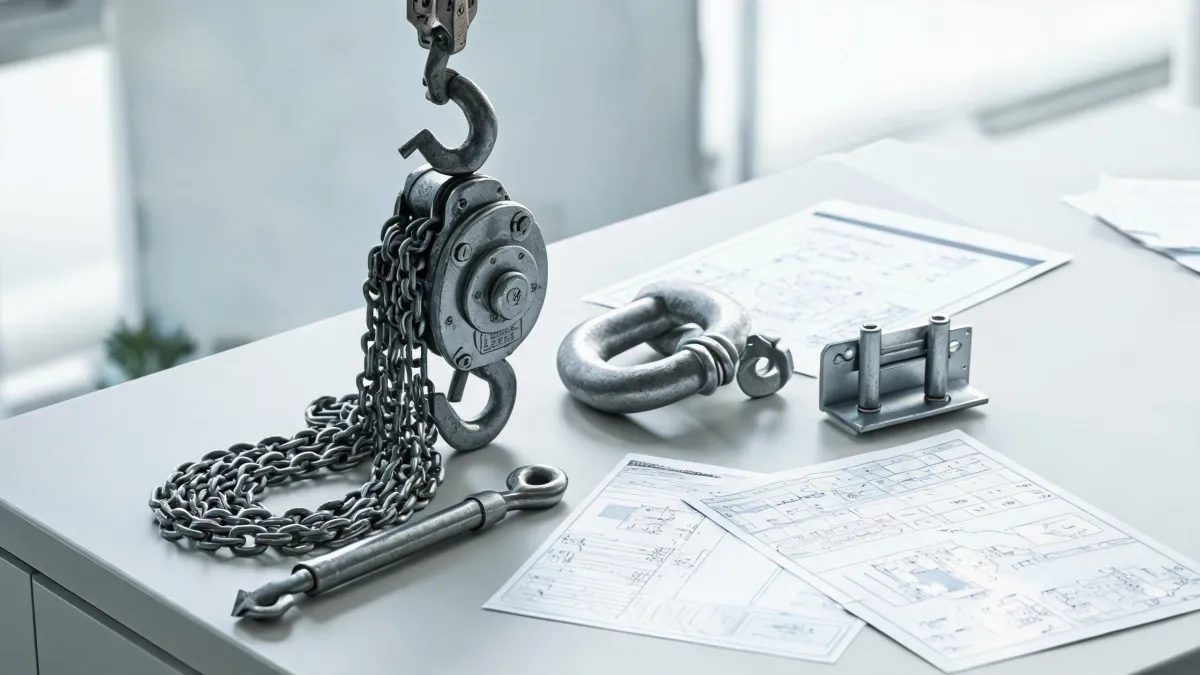
I'm a maintenance planner in a mid-sized metal fabrication facility. I've been handling equipment orders for six years, and in that time I've personally made (and documented) six significant mistakes totaling roughly $17,000 in wasted budget. Now I maintain our team's pre-purchase checklist so other people don't repeat my errors.
My opinion is simple: before you buy a Harrington 2 ton electric chain hoist—or any hoist—stop asking "which one is best?" and start asking "which one fits this specific job?" There is no universal "best" hoist. There's only the hoist that matches the load, lift height, duty cycle (the percentage of time it can run under load before needing to cool down), hook geometry, and power supply you actually have.
The capacity mistake that cost me the most
In my first year (2017), I ordered a 3-ton electric chain hoist for a maintenance bay that mostly lifted 1,000 to 2,000 lb loads. I thought the extra capacity would give us flexibility. What I mean is that I confused "more capacity" with "more useful." It didn't take long to realize the opposite: the 3-ton unit was slower, bulkier, and harder to install in our low-clearance bay. The right-sized 1-ton unit could have done the same work in less time and taken up less space.
Here's the thing: load capacity isn't a decorative badge. It's engineering. A hoist rated for 2 tons can lift 4,000 lb, but that rating assumes a straight vertical lift, proper rigging, and no shock loads. If you choose a bigger hoist than you need, you don't get a safety bonus—you get slower speeds, more weight, and higher costs for parts and maintenance.
Hooks and shackles: the parts that humbled me
The second place I lost money is also the most avoidable: hooks and shackles. In September 2022, I ordered a hook kit and a set of shackles alongside a hoist. I assumed "standard" meant every standard hook would fit every standard shackle. Didn't verify. When the shipment arrived, the shackle pin measured 3/4-inch and the hook throat opening was 5/8-inch. (Note to self: verify hook dimensions before ordering.) They were both load-rated enough, but they physically didn't fit together.
That error cost $890 in replacement parts plus a one-week delay. I still remember standing in the shop with two expensive pieces of steel that didn't line up. Now my pre-check includes three numbers: working load limit of the hook, shackle pin diameter, and hook throat opening. If you're ordering a Harrington 2 ton electric chain hoist with a new hook and shackle, ask your supplier to confirm those dimensions before you approve the purchase order.
I assumed "same specifications" meant identical results across vendors. Didn't verify. Turned out each vendor had a slightly different interpretation of "standard." Since then I don't trust a description; I trust the drawing or datasheet.
Per FTC guidelines (ftc.gov), advertising claims must be truthful and not misleading, and claims should be substantiated before they are made. For lifting equipment, the evidence is the nameplate with a rated capacity.
Rush orders and process gaps
We didn't have a formal approval chain for rush orders. Cost us the first time, the second time, and the third time. In Q1 2024, we paid a $320 rush fee that no one remembered approving. That's when I finally created our pre-flight checklist. In the 18 months since, the checklist has caught 47 potential errors—wrong capacities, mismatched hooks, missing voltage requirements, and a few ordering shortcuts that would have hurt us.
If you're near the Nashville area and searching "Harrington electric chain hoists Nashville tn," local support matters. A local distributor can usually confirm specs faster, and freight times aren't a guessing game. But local doesn't mean skip the checklist. One local order still needed the same hook and shackle verification. I've also learned that one extra call to the distributor is cheaper than one return shipment.
Even shipping has a spec check: according to USPS (usps.com), as of January 2025, a First-Class Mail letter (1 oz) is $0.73 and a large envelope (1 oz) is $1.50, and letters can't be thicker than 0.25 inches. We once mailed a manual as a package because we didn't check—minor cost, but the same mistake class as mismatching hooks.
The search queries that don't belong here
Sometimes people land on this site looking for something completely different. "Do you need an air compressor for a nail gun?" If you're using a pneumatic nailer, yes—you need an air compressor to supply the air. If you're using a cordless nailer, you don't. But that's a different tool conversation, and I'm not going to pretend a nail gun compressor belongs in a hoist article.
Similarly, "lawn mower gas cap" is a search that probably doesn't belong here either. A gas cap is part of an engine, not a hoist. If you came to one of our pages with those search terms, here's the honest answer: you are probably in the wrong place, or at least you need a different part. I'd rather tell you that than point you toward a product you don't need. Look, I'm not trying to sell you something that doesn't fit. That's the same reason I'm not going to tell every reader to buy an electric chain hoist. If your lifting job happens twice a year and you have 220V single-phase, a manual chain hoist may be the more honest choice.
Final check before you order
Here's a clear recommendation: a Harrington 2 ton electric chain hoist makes sense if you're lifting heavy loads on a regular basis, you have the correct voltage and headroom, and your hooks match your shackles. It doesn't make sense if your task is occasional, if your power supply is uncertain, or if you're buying extra capacity just to feel safer. In those cases, I'd recommend a manual hoist or a custom rigging review.
You might be thinking, "If I buy a bigger hoist, I'll be covered for future jobs." I get that. I used to think that too. But a hoist that's too large for your space is not coverage; it's a liability. It moves slower, weighs more, and can be harder to control in tight spots. The right question is: what do you know will be lifted in the next two years, and what's the best tool for that? If rare big jobs do show up, rent a properly sized unit for that one project.
Even after we chose the 2-ton electric model for our production line, I kept second-guessing. What if we grew into heavier loads next year? The two weeks until delivery were stressful. Then I did the math: we had one possible future product that weighed 3,500 lb, and renting a larger hoist for that one project was $600. Buying a larger hoist now would have made all 2,000 lifts before then slower and more annoying. The expected value said right-size now, and the downside of a rental was manageable.
My final advice? Pick a hoist the same way you pick any serious tool: by the work it will do, not by the number on the brochure. Verify the hook and shackle dimensions. Confirm your power supply and clearances. Ask whether a manual hoist is more honest. You'll save money, time, and the kind of embarrassment I've already paid for.

Maren Jorgensen
Maren Jorgensen is an independent hand tool and torque applications analyst covering wrenches, pliers, screwdrivers, hammers, sockets, ratchets, hex keys, and tool sets. She applies ISO 6789-1 torque-tool conformance principles while examining jaw capacity, leverage, fastener engagement, torque range, accuracy, handle geometry, and material hardness. Her practical guides help tradespeople and procurement teams select suitable tools, plan controlled tightening, and compare durability without relying on brand reputation alone.