The Real Cost of “Good Enough”: A Quality Manager’s Take on Hoists, Switches, and Repairs
2026-08-25 by Maren Jorgensen
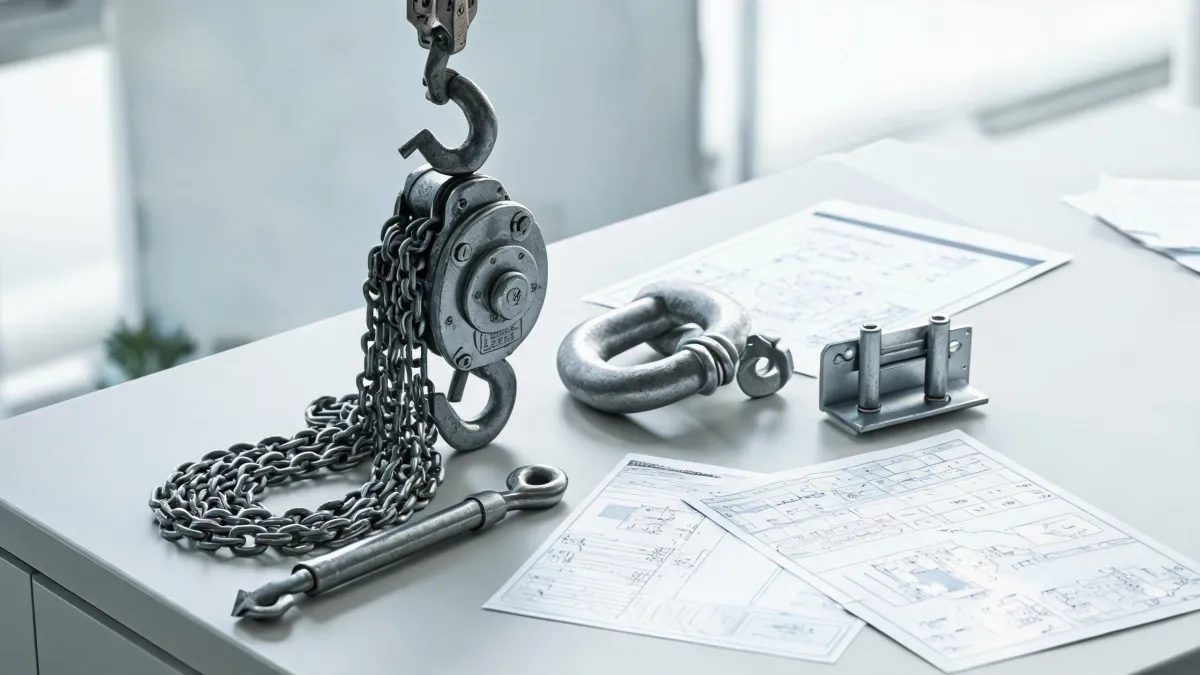
You’ve got a hoist that stalls under load. Or an air compressor switch that clicks but won’t stay on. Or a cupboard door that won’t close no matter how hard you push it. The instinct is to blame the product and go shopping for a replacement—or worse, for the cheapest replacement.
That instinct is wrong. Not completely wrong, but wrong in a way that costs you time, money, and patience.
I’m a quality/compliance manager at a lifting equipment company. I review every hoist and accessory before it reaches customers—roughly 1,800 items a year. In 2024, I rejected about 6% of first deliveries due to tolerance and documentation issues. So I’ve watched what happens when "good enough" isn’t.
The Surface Problem: Bad Products and Nagging Repairs
At the surface, every failure looks like a product defect. A 1-ton hoist won’t lift. An air compressor switch won’t hold. A hinge screw strips. But failures repeat in patterns. After a few years, you notice that the pattern is almost always about mismatched specifications, skipped documentation, or ignored maintenance.
Air duct repair Harrington contractors often call us because their old chain hoist is too slow to position a duct section precisely. They think they need a bigger hoist. In one case, the hoist was rated for the load—actually, no, wait: it was rated for 1,000 pounds and the duct section weighed closer to 1,200. The operator had read the nameplate but misinterpreted it. That’s a training and documentation problem, not a manufacturing flaw.
The Deep Cause: We Shop for Price, Not for Total Cost
When I first started managing vendor reviews, I assumed the lowest quote was the best choice. Three budget overruns later, I understood total cost. Price is easy to compare. Specifications are not. A hoist from one maker may list a 1-ton capacity but have a shorter chain, a narrower hook, or no manual. Same spec on paper, different reality in the air.
It took me about 150 vendor orders and three years to realize that the "best" product depends on how well it matches the application—not just the tag. That’s why at Harrington we specify hoists from 1/4 to 5 tons, manual and electric, and we make the manuals and replacement parts available. The product line matters, but the system around it matters more.
This is where the "cheap" argument falls apart. A $14 air compressor switch might save you $6 over a quality switch. When it fails, it can kill the compressor’s pressure trip, require an urgent service call, and shut down production for half a day. The $6 savings becomes a $500 repair.
The Real Cost of "Good Enough"
Let’s talk dollars. In Q1 2024, we audited ten returned electric chain hoists. Five had failed because of electrical supply issues, not hoist defects. The customers didn’t know because they’d thrown the manual into a drawer and let a subcontractor wire the unit. The average rework cost was about $320 per unit, plus downtime. If you own a Harrington 1 ton chain hoist manual, keep it with the unit—that piece of paper is part of the safety system.
Another example: a contractor bought a budget manual hoist because the quote was $200 lower than a comparable Harrington. The load chain binded after two months. The manufacturer couldn’t supply a replacement chain, so they had to buy an entire hoist. That $200 savings turned into a $1,500 problem. Or rather, $1,400 if you don’t count the emergency shipping.
I don’t have hard data on industry-wide failure rates for low-priced hoists, but based on our returns, I can tell you anecdotally: the products that come back with no manuals, no parts lists, and no service path are almost always from brands that exist only as a sticker. Honestly, some inexpensive products are perfectly fine. The risk appears when there’s no one to call and no spare part available.
The Same Logic Follows You Home
This isn’t only about industrial lifting. At home, a homeowners hand tool set can handle a surprising number of jobs—if you choose the right tool for each one. Using a worn screwdriver to adjust a cupboard door hinge is how you strip the screw and end up replacing the hinge. The problem isn’t the tool set. It’s the mismatch between tool and task.
If you’ve ever searched for how to adjust a cupboard door hinge, you know the standard fix: loosen the screws, shift the door, tighten. But the real fix includes checking whether the frame is square and whether the hinge screw length is right. That extra step is the difference between a five-minute adjustment and a weekend project.
The Solution: Stop Buying Products, Start Buying Systems
The answer isn’t simply to spend more. It’s to buy things that have support. For a hoist, that means a nameplate with rated capacity (covered by standards like ASME B30.16), a manual in the language of your workplace, replacement parts that you can actually order, and a dealer who can answer a question on a Tuesday afternoon. At Harrington, that support is as important as the gearbox.
If you already have a hoist, start with the manual. If you don’t, ask for it before you buy. If you need a replacement part, make sure the brand can supply it—not just a "compatible" part from an unnamed source. The same thinking applies to an air compressor switch, a hand tool set, or a hinge adjustment: quality is not a luxury item. It’s a way to avoid paying for the same problem twice.
When you’re tempted by the lowest quote, do the total-cost math: purchase price + installation + training + maintenance + downtime. If the cheap option doesn’t include a manual, a parts source, or a person you can call, it’s not cheap. It’s incomplete.
So the next time a hoist stalls, a switch clicks, or a cupboard door won’t close, don’t ask "What’s the cheapest fix?" Ask "Why did this fail, and what will prevent it from failing again?" The answer is usually in the specification, the manual, or the quality of the brand behind it.
That’s the part nobody puts on the price tag.

Maren Jorgensen
Maren Jorgensen is an independent hand tool and torque applications analyst covering wrenches, pliers, screwdrivers, hammers, sockets, ratchets, hex keys, and tool sets. She applies ISO 6789-1 torque-tool conformance principles while examining jaw capacity, leverage, fastener engagement, torque range, accuracy, handle geometry, and material hardness. Her practical guides help tradespeople and procurement teams select suitable tools, plan controlled tightening, and compare durability without relying on brand reputation alone.