The $12,000 Chain Hoist Mistake: Why Quality Is Your Brand's Best Insurance
2026-09-24 by Amara Nwosu
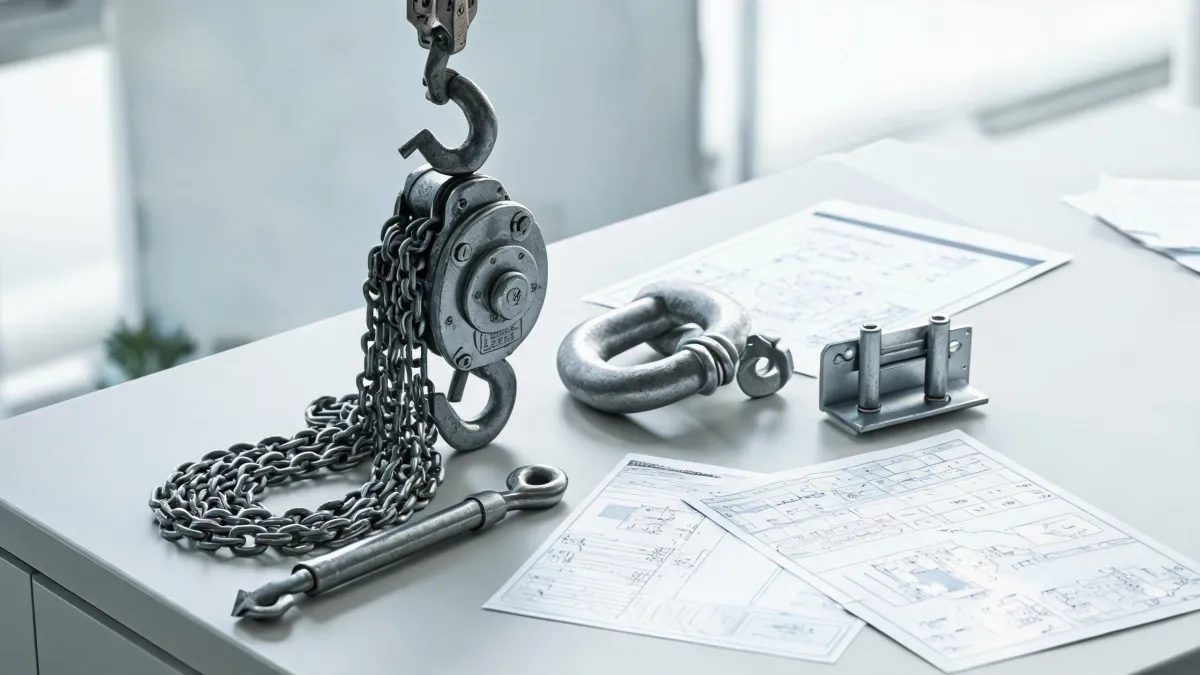
You think buying a chain hoist is straightforward. Pick a capacity, check the price, place the order. I used to think that way too. Then I made a $12,000 mistake that nearly cost us a major client. That was in 2019, and I've been documenting procurement pitfalls ever since.
I'm a procurement manager handling industrial equipment orders for eight years. I've personally made (and documented) 23 significant mistakes, totaling roughly $47,000 in wasted budget. Now I maintain our team's checklist to prevent others from repeating my errors. This is the story of my worst one—and why I'll never buy a cheap chain hoist again.
The Surface Problem: "It's Just a Hoist"
In early 2019, we needed six 2-ton chain hoists for a fabrication shop expansion. The project timeline was tight—we had two weeks before installation. I got quotes from three suppliers. The lowest bid was 40% below the others. The specs looked identical: 2-ton capacity, 10-foot lift, manual chain. I figured the extra cost was just brand markup. So I went with the cheap option. That decision cost us $12,000 and a week of downtime.
My gut said something was off. The supplier was slow to respond, and their spec sheet had a few typos. But the numbers said we'd save $3,200. I ignored my gut. I've learned that's usually a mistake.
The Deeper Reason: You're Not Just Buying a Hoist
When the hoists arrived, they looked fine. We installed them and started using them. Two weeks later, one failed under load. The chain slipped, and a 1,800-pound steel beam dropped six inches. Thankfully, no one was hurt. But the hoist was ruined, and we had to stop work.
That's when I discovered the real problem: the hoist used a non-standard chain size. No local supplier carried replacement chains. The manufacturer's manual was a single sheet of poor English. When I called their support line, I got a voicemail box that was full. We couldn't get parts, and we couldn't get answers.
I called Harrington, a brand we'd used before on other projects. Their tech support walked me through the issue in ten minutes. They explained that their hoists use standard chain sizes and that their manuals include full parts breakdowns. They also offered training for our operators. That's when I realized: a hoist isn't just a piece of metal. It's a system—chain, hooks, brakes, manuals, and support. When you buy cheap, you're buying into a system that doesn't support you.
"Industry standard for overhead hoists, ASME B30.16, requires that manufacturers provide clear operating manuals and replacement parts availability. Many low-cost imports skip these requirements. As of January 2025, verify that your supplier meets ASME B30.16 and OSHA 1910.179 before purchase."
I later learned that this pattern repeats across industrial purchases. We once bought a towable air compressor that seemed like a steal. It broke down on the first job site. The repair cost more than the savings. I also grabbed an 84010H 8 piece long hook & pick set from a discount bin. The tips bent on the first use. And I hired a garage door repair service in Harrington Park, NJ, thinking it was a simple job. The door fell off the tracks two weeks later. Same principle: you get what you pay for.
Even questions like "does cabinet hardware need to match faucet?" have a similar lesson. In residential work, mismatched finishes might be a minor aesthetic issue. But in industrial equipment, mismatched parts can cause failures. I tried to mix hoist brands once—never again. The hooks didn't fit the chains properly, and we had to scrap the whole setup.
The Cost: More Than Money
That $12,000 mistake broke down like this: $3,200 wasted on the cheap hoists, $4,500 for emergency replacement hoists (rush shipping), $2,800 in lost labor during the downtime, and $1,500 in expedited freight to get the project back on track. Total: $12,000. But the real cost was reputational. Our client saw the delay and asked if we were cutting corners. We almost lost the contract.
In my opinion, the biggest cost was trust. When you use unreliable equipment, your clients notice. They start to question your professionalism. That's why I now believe quality is your brand's best insurance. The $3,200 we "saved" cost us $12,000 and nearly a client relationship. That's a 375% negative return.
I've since compared our old Harrington hoists with the cheap ones side by side. The difference is obvious: thicker chain, better brake design, clear manuals, and responsive support. When I compared them, I finally understood why the details matter so much. It's not about brand loyalty—it's about total cost of ownership.
The Solution: A Simple Checklist
After that disaster, I created a pre-purchase checklist for all lifting equipment. It's not complicated, but it's saved us from at least 47 potential errors in the past 18 months. Here's what I check:
- Parts availability: Can I get replacement chains, hooks, and brakes within 48 hours? (Harrington, for example, stocks parts for their manual and electric hoists.)
- Manual quality: Does the manual include a full parts breakdown and clear safety instructions?
- Support: Can I reach a human who knows the product? Call the support line before you buy.
- Certifications: Does the hoist meet ASME B30.16 and OSHA 1910.179? Ask for documentation.
- Training: Does the supplier offer operator training? (Harrington does, and it's worth it.)
I also apply this to other purchases. That towable air compressor? Now I check the service network first. The 84010H pick set? I buy from known tool brands. And for services like garage door repair in Harrington Park, NJ, I now read reviews and ask for references. I even double-check things like whether cabinet hardware needs to match faucet—because consistency matters, even if it's not always required.
As for Harrington Industrial Plastics LLC—that's a different company, but the lesson is the same: verify your supplier. Don't assume a familiar name means the same quality.
The bottom line: cheap hoists are a false economy. When you buy a hoist, you're buying reliability, safety, and your company's reputation. In my experience, paying a fair price for a quality brand like Harrington is the cheapest option in the long run.
"This pricing and standard information was accurate as of January 2025. The market changes fast, so verify current rates and standards at ASME and OSHA before budgeting."
I wish I'd learned this before 2019. But if you're reading this, you can avoid my mistake. Check the details. Ask the hard questions. And remember: quality is not a cost—it's an investment in your brand.

Amara Nwosu
Amara Nwosu is an independent hydraulic tool and pump systems analyst covering jacks, cylinders, pullers, torque wrenches, hand pumps, power pumps, and porta-power equipment. She applies ISO 4413 safety principles while examining rated pressure, cylinder force, stroke, oil volume, flow, return type, hose condition, load holding, pressure loss, and relief protection. Her technical guides help maintenance and construction teams configure compatible systems, verify safe capacity, and diagnose slow or unstable operation.