The $92 Wrong Part: Why I Read Manuals Before I Order Anything
2026-09-07 by Maren Jorgensen
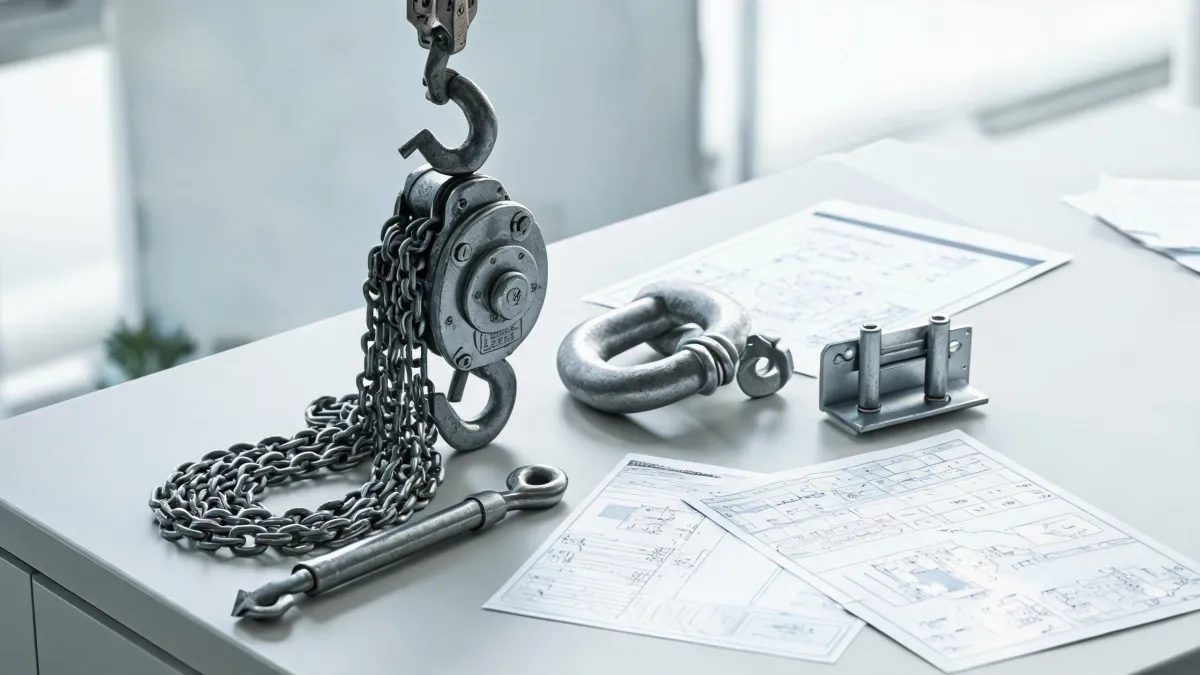
A Work Order That Shouldn’t Have Taken a Full Day
In April 2024, a work order landed on my desk with six words: “2-ton chain hoist dragging under load.” I manage purchasing for a 50-person maintenance company, which means every purchase request crosses my desk—roughly $260,000 a year across 14 vendors. I report to both operations and finance, so I’m supposed to be fast and careful at the same time. I’m not a mechanic, and I haven’t been trained on hoists. I just know who to ask and what to buy.
Our lead technician wrote that the hoist was slowing down or catching. He didn’t add a model number, a photo, or a “recommended part.” So I did what I usually do when I don’t know a part: I searched for the Harrington 2 ton chain hoist manual. I found a PDF. And then I made the mistake I’ve made more times than I like to admit. I skimmed the manual, went to a parts website, and matched a part by photo.
The part cost $92. With next-day shipping, the total was $139. It arrived at 9:30 the next morning. It was wrong.
More precisely, it was the right part for a different version of the same hoist. I had not verified the serial number or the exact model from the nameplate. I had guessed.
The Deeper Problem Wasn’t the Website. It Was How I Started.
If I blamed the parts website, that would be easy. But the issue came earlier. I treated the part as the starting point. It isn’t. The manufacturer’s identification is the starting point.
When I took over purchasing in 2021, I truly believed buying a replacement part worked the same way as buying office supplies. You look at the picture, check “compatible,” and move on. That works for pens. It does not work for something designed to lift 4,000 lb and lower it safely, day after day.
It took me three years and plenty of return labels to understand what I should have known from the beginning: a replacement part is not a standalone item. It belongs to a specific machine, in a specific configuration, with specific tolerances. If the request doesn’t name those facts, you aren’t saving time. You’re gambling.
That’s why vague requests now make me slow down. When a technician writes “hammer parts,” I don’t know whether they need a sledgehammer handle, a demolition hammer piston, or a mallet head. If there’s no brand and model, I’m back to matching by photo. Same with a garage door extension spring. The length, inside diameter, wire thickness, and rated cycles all matter. A spring that is “close enough” can make a door unbalanced, and that’s a risk I don’t need.
I’m not an engineer, so I won’t pretend to eyeball those specs. My job is to help the person who knows what they’re doing get the correct documentation in front of them.
That’s where the Harrington catalog changed my routine. It sounds like marketing, but the catalog is organized by model number, capacity, lift, chain size, and replacement parts diagrams. It doesn’t replace the manual, and it doesn’t replace a mechanic’s judgment. It makes the first step easier. Now I search the catalog before I search the general internet.
The process is slower in the short run. The upside is that it saves the expensive part: the second order, the overnight shipping, and the service call that goes sideways.
The Real Cost Isn’t the Wrong Part. It’s the Time Around It.
Let’s put numbers on the hoist mistake. The wrong part cost $92 plus $47 shipping. The return label probably cost another $15, and I spent 30 minutes packing it up and emailing the vendor. The correct part cost $148, plus $82 for express delivery because the tech had already blocked out time for the repair. Total extra cost: almost $300 before either of us touched a wrench.
That’s not the whole picture, though. The hoist was offline for an extra day. Our crew had to reschedule, the customer’s schedule got tighter, and the whole job became more stressful. It was a chain reaction caused by a two-minute decision.
I used to think rush delivery was a waste of money. That changed in March 2024, when my company paid an extra $180 to get a $65 hoist brake component to a client site overnight. The client had a fixed maintenance window, and if the part missed that window, the work would have waited another month. The $180 felt ridiculous until I compared it to the cost of a wasted trip and a damaged relationship. It wasn’t really paying for speed. It was paying for certainty.
Now I see the distinction more clearly. The problem isn’t paying for certainty. The problem is paying for speed before you have verified what you’re actually buying. Next-day air on the wrong part isn’t speed. It’s tuition.
And with lifting equipment, I don’t want to learn by experience. I’m not a safety inspector, so I can’t quote ASME B30.16 from memory. What I can tell you is this: the manual and the parts list are not optional reading. They exist so a buyer like me doesn’t have to decide what “probably fits” means.
If you’re ordering parts for something that lifts or holds a load, being right matters more than being quick. The quick part only counts once the right part is identified.
What I Do Differently Now
The fix wasn’t a new software system or a stricter approval policy. It was a change in how I start every order:
- For lifting equipment, I start with the model number on the nameplate. If I can’t read it, I ask for a photo before I buy anything. The Harrington 2 ton chain hoist manual only helps if I’m looking at the right model section.
- I use manufacturer catalogs the way I’d use an index. The Harrington catalog shows me what options exist, so I can ask better questions before I get to the parts diagram.
- When a maintenance request is vague, I send it back with one question: “What are the brand and model?” It feels annoying for two minutes, and it saves everyone from the wrong-order loop.
- For questions like “how much air tool oil to use,” I no longer answer from memory. I look it up. The manual usually says a few drops, but the exact amount depends on the tool. Sixty extra seconds of looking is cheaper than a gummed-up pneumatic wrench.
This isn’t the dramatic answer you might have expected. I’m not selling a system or an inventory trick. I’m asking you to respect the manual before you click order. If you buy maintenance parts for a company, you have more influence than you realize. Use it to make the boring, correct choice.
It’s less exciting than the story of a $92 wrong part, but I’ve learned to prefer boring and correct over fast and wrong.

Maren Jorgensen
Maren Jorgensen is an independent hand tool and torque applications analyst covering wrenches, pliers, screwdrivers, hammers, sockets, ratchets, hex keys, and tool sets. She applies ISO 6789-1 torque-tool conformance principles while examining jaw capacity, leverage, fastener engagement, torque range, accuracy, handle geometry, and material hardness. Her practical guides help tradespeople and procurement teams select suitable tools, plan controlled tightening, and compare durability without relying on brand reputation alone.