The Hidden-Fee Trap: Why I Ask 'What's NOT Included?' Before 'How Much?'
2026-09-11 by Maren Jorgensen
-
The Only Quote That Matters Is the Out-the-Door Number
-
Argument 1: Most Buyers Focus on the Wrong Number
-
Argument 2: Cheap Vendors Aren't Cheap—They're Just Opaque
-
Argument 3: The Overconfidence Tax
-
Argument 4: Time Pressure Makes You Blind
-
The Harrington Valves Wake-Up Call
-
What About 'Everyone Pads the Quote'?
-
My Pre-Purchase Checklist (Use It)
-
The Bottom Line
The Only Quote That Matters Is the Out-the-Door Number
Transparent pricing is not a nice-to-have. It's the only way to compare bids. I learned that the hard way after 11 years of handling maintenance and equipment orders for a manufacturing plant and a satellite office in Harrington Park, NJ. I've personally made and documented 7 significant purchasing mistakes, totaling roughly $18,400 in wasted budget. Now I maintain our team's pre-purchase checklist. This article is that checklist, in story form.
Look, I'm not saying budget options are always bad. I'm saying that a low sticker price without a clear scope is a red flag. Here's the thing: most hidden fees are avoidable if you ask the right questions upfront.
Argument 1: Most Buyers Focus on the Wrong Number
Most buyers focus on per-unit pricing and completely miss freight, installation, setup, disposal, and parts that can add 30-50% to the total. The question everyone asks is 'what's your best price?' The question they should ask is 'what's included in that price?'
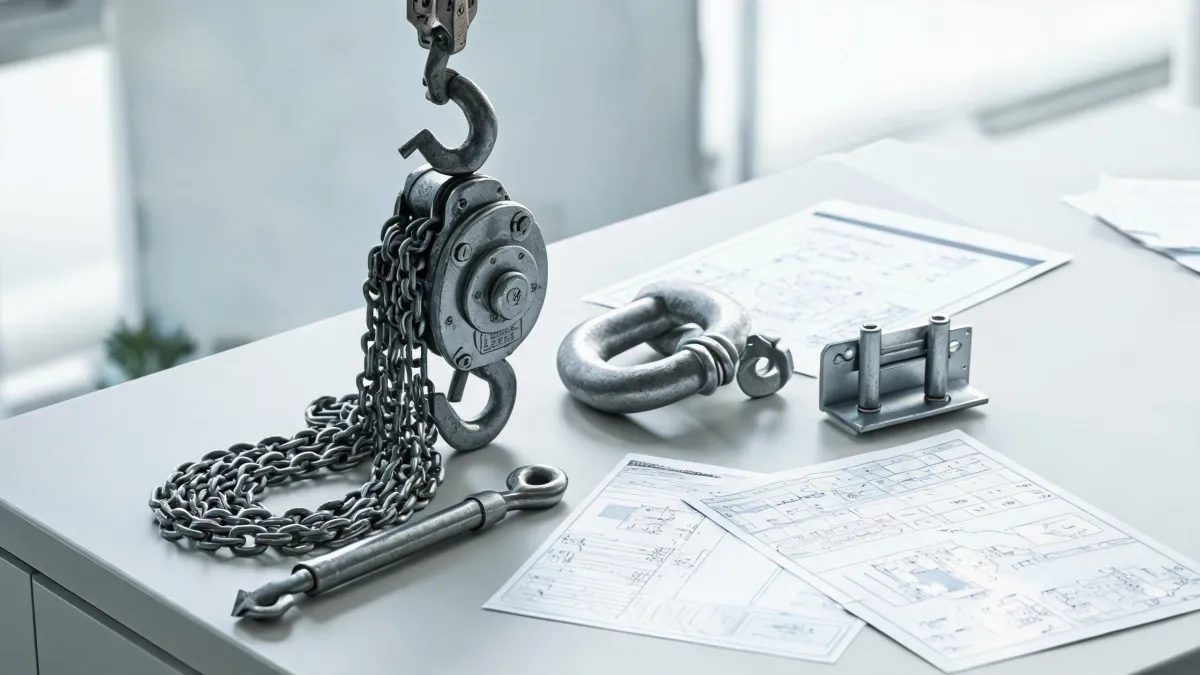
In 2022, we needed a 2-ton manual chain hoist for a maintenance bay. The Harrington hoist looked competitive at $1,180. We approved it. Then came the freight: $180. Then the load test required by our safety policy: $250. Then the chain bag and hook latch kit: $90. Total: $1,700. Another supplier had quoted $1,520 all-in, but I had anchored on the lower sticker. That mistake cost us $180 and a week of arguing with accounting.
According to ASME B30.16, manual hoists must be marked with rated load and safety information. That's essential, but it doesn't tell you who pays for the load test or the freight. You have to ask.
Argument 2: Cheap Vendors Aren't Cheap—They're Just Opaque
People think expensive vendors deliver better quality. Actually, vendors who deliver quality can charge more. The causation runs the other way: transparent vendors can afford to quote higher because they're not hiding anything. The lowball quote is often just the entrance fee.
In September 2023, I hired a garage door repair Harrington Park NJ. The quote was $150 for a spring replacement. The final bill was $420. Why? The spring was $150, but the track alignment was $120, the emergency service call was $75, and the disposal fee was $75. None of that was mentioned. I knew I should get written confirmation, but thought 'what are the odds?' Well, the odds caught up with me.
If they had quoted $400 upfront, I would have compared it fairly against another company. Instead, I felt tricked. That's the real cost: not the $270 difference, but the trust.
Argument 3: The Overconfidence Tax
I once ordered a 4hp 13 gallon air compressor from a vendor we'd used for years. I skipped the final review because we were rushing and 'it's basically the same as last time.' It wasn't. The quote didn't include the liftgate fee ($75), the oil and break-in kit ($40), or the startup service ($120). That's $235 in hidden costs on a $600 compressor. A 39% surprise.
Here's the thing: the vendor wasn't malicious. They just had a different definition of 'delivered.' To them, delivered meant 'on the truck.' To me, delivered meant 'running in my shop.' That gap is where budgets die.
Argument 4: Time Pressure Makes You Blind
Had 2 hours to approve a 21-in. 140cc gas push lawn mower M100 for our grounds crew. Normally I'd get multiple quotes, but there was no time. Went with our usual dealer based on trust alone. The invoice added assembly ($65), blade sharpening ($20), and freight ($45). Again, not huge, but it's the pattern that matters.
In hindsight, I should have pushed back on the timeline. But with the facilities manager waiting, I made the call with incomplete information. That's when I added 'total delivered cost' to our checklist in bold, capital letters.
The Harrington Valves Wake-Up Call
Last year, we needed Harrington valves for a steam line upgrade. The quote looked reasonable until I asked for the out-the-door number. Actuator, positioner, mounting kit, and factory calibration were all extra. The total jumped 32%. I almost signed the original quote because I assumed 'valve' meant everything needed to make it work. It didn't.
That's when I realized this isn't a hoist problem or a valve problem. It's a communication problem. And the only fix is to ask, in writing, for a line-item scope that includes every component and service.
What About 'Everyone Pads the Quote'?
Some people say transparent pricing is a marketing gimmick. Others say every vendor pads the quote, so you should just expect it. I disagree. A vendor who lists all fees upfront—even if the total looks higher—is giving you data. You can negotiate. You can compare. You can budget. The hidden-fee vendor is selling you a surprise, and surprises are expensive.
I once spent an evening learning how to pick a bedroom door lock with key after a tenant lockout. The mechanism is simple once you see the pins. Hidden fees work the same way: once you know the pins, you can't unsee them. Freight, setup, disposal, calibration, emergency fees—those are the pins. Ask about them before you sign.
My Pre-Purchase Checklist (Use It)
- Ask for the out-the-door total in writing. Not the unit price. The total.
- List every line item: equipment, freight, installation, calibration, testing, disposal, training, and first-year consumables.
- Ask what voids the warranty. Many hidden fees come from 'unauthorized' installation or missing startup service.
- Get the lead time in days, not weeks. '2-3 weeks' can mean 21 days or 35.
- Confirm who handles returns and who pays return freight.
- For safety-critical equipment like hoists, verify the rated load and inspection requirements. According to ASME B30.16, manual hoists must be marked and inspected. Don't let a low quote skip the inspection.
As of January 2025, a 2-ton manual chain hoist typically costs $900–$1,600 depending on lift height and brand, based on quotes from three industrial suppliers. Verify current pricing. But remember: the sticker is not the cost. The cost is the total you pay to get it working safely in your facility.
The Bottom Line
Transparent pricing isn't about being the cheapest. It's about being comparable. If a quote doesn't include freight, installation, setup, disposal, and parts, it's not a quote. It's a teaser. Ask for the out-the-door number. Ask what's not included. Ask until you get a number you can trust.
I've wasted $18,400 learning this. You don't have to.

Maren Jorgensen
Maren Jorgensen is an independent hand tool and torque applications analyst covering wrenches, pliers, screwdrivers, hammers, sockets, ratchets, hex keys, and tool sets. She applies ISO 6789-1 torque-tool conformance principles while examining jaw capacity, leverage, fastener engagement, torque range, accuracy, handle geometry, and material hardness. Her practical guides help tradespeople and procurement teams select suitable tools, plan controlled tightening, and compare durability without relying on brand reputation alone.