Why I Buy on Total Cost, Not List Price, When a Plant Is Down
2026-08-27 by Maren Jorgensen
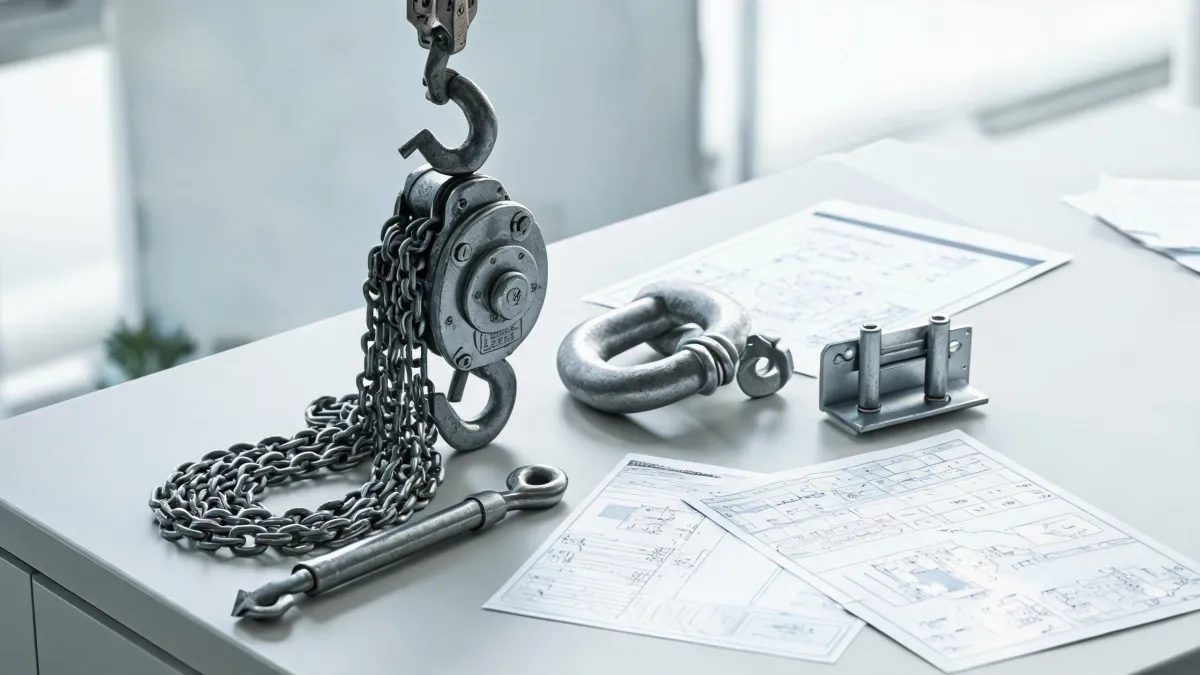
When a line goes down, the first reflex is to order the replacement fast. In my role coordinating rush parts orders for industrial and maintenance clients, I've handled 200+ emergency requests in the past few years, and the pattern is, honestly, almost always the same: the problem isn't delivery speed, it's part verification. People buy first, check later, and pay twice. The rule that has saved us more times than any rush shipping account is simple: the total cost of a wrong part in an emergency is usually 10 to 20 times the price difference you were trying to save.
That doesn't mean always buy the expensive option. It means always buy the verified option. A lower price is nice after you confirm the part is actually the same component. Here's how I think about it, with a few examples from real jobs.
The 'Cheapest Fastest' Reflex Is the Problem
It's tempting to think you can just compare prices and delivery times. For standard supplies, that works. But for mechanical, hydraulic, or lifting components, identical-looking specs from two suppliers can produce completely different outcomes.
Here's the math I run, roughly. Suppose downtime is worth $850 an hour. A verified replacement costs $240 with expedited freight. A lookalike costs $200 but it's 'probably right.' If the lookalike is wrong, you haven't saved $40—you've lost a full delivery cycle. If the correct part takes six more hours to get to you, that's $5,100 in downtime, plus the original $200, which is way more than the price difference you were trying to save. The verified part was the cheap one.
This is why I've stopped looking at a line item in isolation. Whether it's a Harrington 1 ton electric chain hoist brake assembly, a manual 3-way ball valve, or a replacement armature for a saw, the total cost question comes first.
If You Don't Have a Diagram, You Don't Have a Part Number
Let me give you a real example. In March 2024, a client called 36 hours before a scheduled inspection. Their Harrington 1 ton electric chain hoist was dragging under load. One supplier had a generic service kit for about $80 less than the manufacturer's kit. The listing said 'fits most 1-ton hoists.' 'Most' is doing a lot of work in that sentence.
We pulled the actual parts diagram and found that the generic kit didn't include the worn brake plate. The diagram gave us the right part number in about 10 minutes. We paid the extra $80 and the hoist was ready in time for the inspection. The client's alternative was another shutdown, a rescheduled inspection, and a hoist operating under a cloud of uncertainty. The $80 wasn't the cost of that risk; it was the cost of removing it. Hoist safety standards like ASME B30.16 assume the unit is maintained according to the manufacturer's guidance. A 'universal' part that's 'close enough' violates that assumption before you even install it.
It feels kind of ridiculous to stop an emergency to pull up a drawing. But that's exactly what pays off. I should have known this earlier. A few years back, I ordered a blade guard spring for a circular saw from a photo, not from a circular saw parts diagram. The spring was close in the photo—or rather, the photo made it look close. The real spring caused the guard to bind. What should have been a 20-minute repair turned into an extra overnight shipment and an annoyed shop manager. I still kick myself for that one. Now, if a part has a mounting bracket, spring behavior, or electrical rating, I require the diagram before I approve it. In an emergency, that step actually saves time.
Know What the Part Actually Does Before You Need It
The second common mistake is not verifying the function, even when the part number is right. A manual 3-way ball valve can look the same from the outside, but the ports may be arranged in an L-pattern or a T-pattern. Those two designs route flow in completely different ways. If you need to divert flow and you buy the L-port instead of the T-port, the line still doesn't work. The valve is fine, the application is wrong, and the process is still down.
The same idea comes up when people ask how does a knife gate valve work. It's not just a gate valve with a knife edge. A knife gate valve uses a thin blade to cut through media and shut off against the seat, which makes it well suited for slurries, sludge, and bulk solids. If you swap it for a standard gate valve in a slurry application, debris packs into the seat and the valve eventually fails. That's not a cheap-vs-expensive issue; it's a design compatibility issue.
I've had to rebuild lines specified with Harrington Industrial Plastics products, too. The same verification rule applies: check the material grade, the end connection, and the pressure rating. Poly pipe, CPVC, and PP handle different chemicals and temperatures. The cheapest piece of piping is not a deal if it turns out to be the wrong material for the process.
Local vs. Online Is Not the Real Decision
One piece of advice that hasn't aged well is 'buy from a local supplier in an emergency.' That was true before online inventory data was reliable. Now, a remote supplier with live stock and a good carrier can ship a part to you faster than a local supplier who has to special-order it. The geographic label doesn't move freight.
That isn't an anti-local argument. A local supplier who has the actual part on the shelf is usually the fastest option, period. We use those constantly. The point is to evaluate both by the same standards: does the supplier have the exact part in stock, can they send a photo or part number, and can they commit to a pickup time? If they can't, local or not, they're not helping you.
In my experience, the real emergency-killer is not choosing between local and online. It's using a source that won't confirm a part number. A confirmed remote part beats a hopeful local pick-up. Based on our internal data from 200+ rush jobs, the main cause of missed response times wasn't freight speed. It was wrong or unverified parts. The extra hour spent checking the part number saves days.
When the Low Price Is the Right Price
After all that, I want to be clear: total-cost thinking does not mean 'never buy cheap.' If the item is a standard commodity, the design is known, and the supplier is reliable, the lowest quote can be the smartest choice. I regularly approve generic fasteners, common gaskets, and standard fittings without a seven-step verification. Paying a premium for those is just burning money.
The framework has limits. When a plant is down, spending 45 minutes verifying a $30 bracket is itself a cost. You have to balance the risk of the part against the cost of the delay. Safety-critical and process-critical components get the full verification treatment; everyday maintenance items do not.
For hoist parts, that line is firm. Never use a replacement with a lower rating than the original manufacturer's spec. A part that looks like a brake plate is not automatically a brake plate. Load brakes and friction clutches are engineered components, and guessing with them is exactly how a safe hoist becomes an expensive problem.
There's something satisfying about watching a rush order arrive and click into place on the first try. It looks like speed, but it's really the result of checking the diagram before the panic started. That's the underrated emergency skill: moving fast on verification, not just on spending.

Maren Jorgensen
Maren Jorgensen is an independent hand tool and torque applications analyst covering wrenches, pliers, screwdrivers, hammers, sockets, ratchets, hex keys, and tool sets. She applies ISO 6789-1 torque-tool conformance principles while examining jaw capacity, leverage, fastener engagement, torque range, accuracy, handle geometry, and material hardness. Her practical guides help tradespeople and procurement teams select suitable tools, plan controlled tightening, and compare durability without relying on brand reputation alone.