Harrington Manual vs. Electric Chain Hoists: What a Quality Inspector Learned From 200+ Reviews
2026-08-27 by Maren Jorgensen
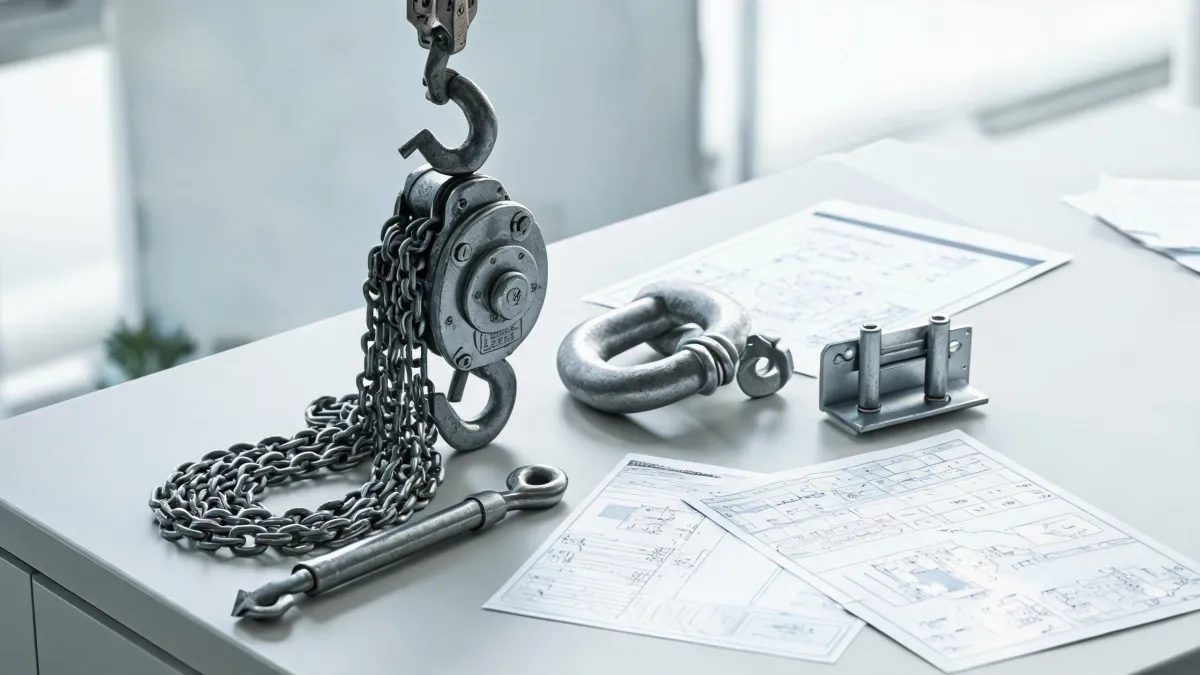
When I first started reviewing hoist specifications, I assumed electric was the obvious choice. More advanced. More modern. Surely better, right?
Four years as a quality compliance manager at an industrial equipment company changed my mind. I review about 200 lifting products every year before they ship to customers—and in 2025, I've rejected roughly 6% of first deliveries for spec mismatches. What I've learned is that "better" depends entirely on how you use the hoist.
This comparison covers Harrington manual vs. electric chain hoists. I've inspected both hands-on, repeatedly, and I'll walk you through the three dimensions that matter: cost of ownership, reliability, and real-world usability. By the end, you'll know which one fits your operation.
Dimension 1: Cost of Ownership
Let's not pretend price isn't the first thing buyers look at. A Harrington 3-ton manual chain hoist costs a fraction of an equivalent electric model. But the sticker price is only the beginning.
Think about installation. A manual hoist hooks onto a support beam, and you're done. No wiring. No electrical work. No contractor. An electric hoist needs power infrastructure, control wiring, and usually a certified electrician—which can add hundreds or thousands to the project. I've priced installations where the electrical work cost more than the hoist itself.
Then there's maintenance. A manual hoist is gears, chain, brake, hook. When something wears, you replace that part. An electric hoist has a motor, gearbox, controls, limit switches, and a pendant—all of which require regular inspection and eventual repair.
Here's the counterintuitive part: for intermittent use, the manual hoist is usually the better financial decision. The money you save covers other things you genuinely need, like a solid 200 piece socket set for maintenance or a hook knife for cutting slings and rope. I've seen too many buyers blow their budget on an electric hoist that sits idle for hours a day. The most expensive hoist is the one that's overkill for your use case.
But I have to say this plainly too: if you're lifting all day, every day, the electric model pays for itself in productivity. The math flips quickly. I'm not here to tell you one is universally better—I'm here to tell you which one is better for your specific situation.
Dimension 2: Reliability and Failure Modes
My inspection team runs load tests, checks tolerances, and tears down sample units. After reviewing hundreds of units, I have a pretty clear picture of how both types behave over time.
Manual hoists fail gradually. The chain stretches. The brake slips a little. The hook shows wear. You can catch these issues during routine inspections. When a problem appears, it's rarely sudden, and the fix is usually a new part, not a new hoist.
Electric hoists fail differently. A motor can burn out without warning. A limit switch can fail intermittently. A wiring connection can loosen inside the pendant and cause the hoist to stop responding entirely. The most frustrating part of reviewing failed electric hoists is that the failure is often unpredictable. You'd think more quality control means flawless operation, but complexity creates its own risk profile. One bad control board and the whole unit is down—no matter how well the mechanical parts were built.
That said, electric hoists have genuine safety advantages. Load limiters prevent lifting beyond rated capacity—a real benefit when operators are tired or rushed. Per FTC guidelines (ftc.gov), load capacity claims like "3-ton rated" must be truthful and substantiated, and the manufacturers that stay in this market long-term take that seriously. Our Q1 2024 quality audit found electric hoists had fewer incidents per lift overall, but more downtime per incident. That tradeoff matters depending on your tolerance for downtime.
Dimension 3: Real-World Usability
Last year, I specified a hoist for an $18,000 facility upgrade. The requirement was straightforward: lift 3 tons, several times a day, with no power source anywhere near the installation point. My initial instinct was electric. It felt like the "proper" recommendation for a client with that kind of budget. Then I calculated what it would take to run power to the location—permitting, conduit, a licensed electrician, potential facility shutdown time.
The infrastructure cost nearly doubled the project budget. We went with the manual Harrington 3-ton chain hoist instead, and redirected the savings into improving the work area.
For two weeks after making that call, I kept second-guessing. What if the customer thought I was cheaping out? What if the manual hoist was too slow for their crew? I didn't relax until the installation was complete and their lead guy told me: "This thing does exactly what we need." That feedback reminded me of something I do not want to forget—choosing the right tool is a quality decision, not a status decision.
Manual hoists genuinely win on precision positioning and portability. A skilled operator can inch a load into place with remarkable control. And if there's no power where the work happens, manual is the only practical option.
Electric hoists win on speed and operator fatigue. A 3-ton manual lift means pulling chain against 6,000 pounds of load. Doing that repeatedly, lift after lift, wears people down fast. An electric hoist moves the same load at the push of a button, all shift long, without exhausting your crew. For high-frequency operations, that's not just convenience—it's workforce protection.
Which Should You Choose?
Here's my no-nonsense guidance, after reviewing more than 200 hoist orders over the past four years.
Choose a manual chain hoist when:
- You're lifting fewer than ten times per day
- No power infrastructure exists at the installation point
- Total project cost—including installation—matters
- Your team can handle routine mechanical maintenance
Choose an electric chain hoist when:
- You're lifting repeatedly, all shift long
- Your loads are consistently near the top of the capacity range
- Operator fatigue is a genuine concern
- Power is already available at the installation point
Tools That Actually Matter for Hoist Maintenance
Whichever type you choose, budget for the support equipment. I recommend every facility keep a quality 200 piece socket set on hand—the cheap ones strip bolts and cause more problems than they solve. And a hook knife is one of those $15 tools you don't think about until you need to cut a synthetic sling or trim a rope, and then you realize you should've owned one for years. Both of these are small investments compared to the equipment they help maintain.
If you're local to Harrington, Delaware, the Ace Hardware there carries a surprisingly useful selection of hoist accessories and shop tools. I've directed several customers to it for replacement parts and maintenance supplies, and I've never heard a complaint.
One Question That Comes Up More Than You'd Expect
During hoist installations, we often run into facility plumbing or compressed air lines that need to be rerouted. That's when the question comes up: how does a three way ball valve work?
It's simpler than people think. Inside the valve, a ball with two or three ports rotates to connect different flow paths. In an L-port configuration, flow goes from the inlet to one of two outlets. In a T-port configuration, all three ports can connect at once. That's the whole mechanism—one handle turn changes which lines are connected.
I mention this because one of our installers nearly tapped into the wrong line during a project a few years back. One wrong valve position from a serious problem. Knowing basic valve function before you start cutting pipes is exactly the kind of small thing that prevents big disasters. It's the same mindset you need for hoist maintenance: understand the equipment before you rely on it.
Bottom Line
Manual hoists aren't "cheap garbage." Electric hoists aren't automatically "the professional choice." They're two tools for two different jobs. A reputable brand like Harrington produces both to a high standard—but choosing the wrong type for your operation will create problems no brand reputation can fix.
When a hoist fails or underperforms on a job site, it's not just an equipment issue. It's a client-facing problem. People notice when your crew can't move a load efficiently, or when a job runs late because the lifting equipment wasn't right. Your equipment choices are part of how customers judge your professionalism.
Count your lifts per day. Check your facility's infrastructure. Be honest about your team's capabilities. The right answer usually becomes clear.

Maren Jorgensen
Maren Jorgensen is an independent hand tool and torque applications analyst covering wrenches, pliers, screwdrivers, hammers, sockets, ratchets, hex keys, and tool sets. She applies ISO 6789-1 torque-tool conformance principles while examining jaw capacity, leverage, fastener engagement, torque range, accuracy, handle geometry, and material hardness. Her practical guides help tradespeople and procurement teams select suitable tools, plan controlled tightening, and compare durability without relying on brand reputation alone.