The 'Cheapest' Chain Hoist Wasn't Cheaper: Why We Standardized on Harrington
2026-08-17 by Maren Jorgensen
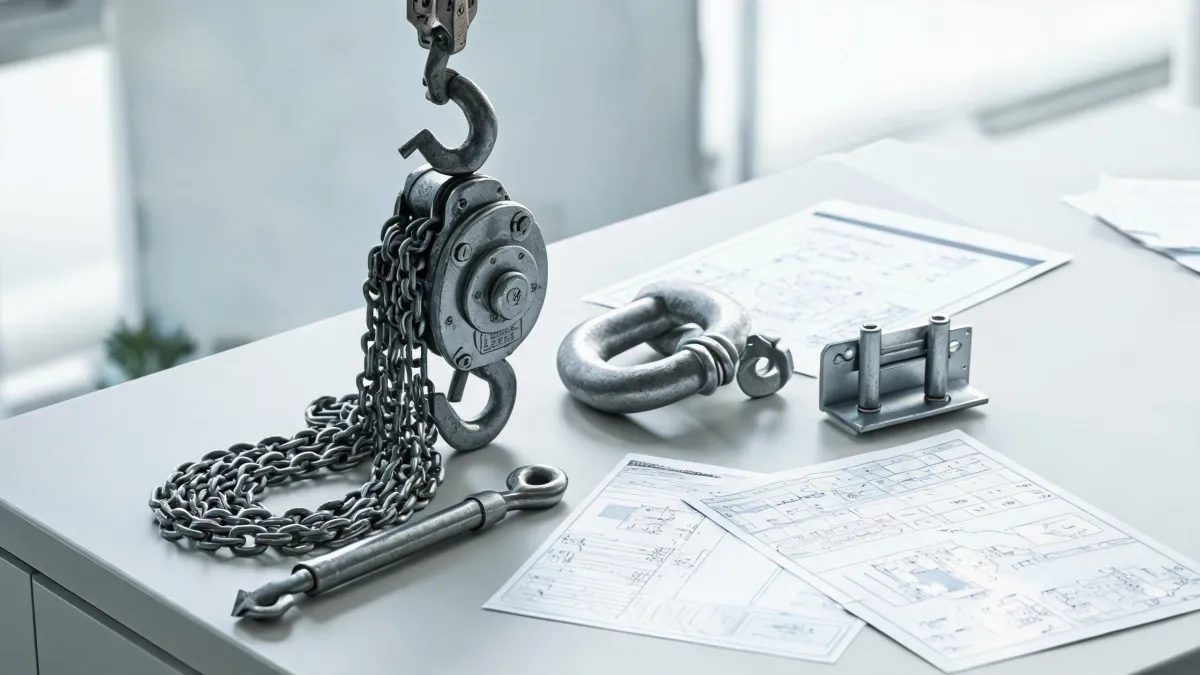
I'm the office administrator at a 200-person manufacturing company. I manage all equipment and maintenance ordering—roughly $60,000 annually across a dozen vendors. I report to both operations and finance. If you've ever sat in that seat, you know the drill: everyone wants it fast, everyone wants it cheap, and nobody wants to explain why a machine is down.
When I took over purchasing in 2020, my first big test was buying a 1-ton chain hoist for the maintenance bay. Seemed straightforward enough. I compared quotes, picked the lowest one, placed the order. What could go wrong?
Turns out, plenty.
The Surface Problem: Everyone Shops on Price
From the outside, it looks like a chain hoist is a chain hoist. Hang it from a beam, hook the load, pull the chain or press a button. The reality? There's more variation in build quality, parts availability, and after-sales support than any spec sheet will show you.
The salesperson on the phone was friendly enough. They called their unit a "direct equivalent" to the brand we'd been using. Thirty percent cheaper. Fast delivery. I signed off without doing my homework. That was the first mistake.
The Deep Problem: What the Quote Doesn't Tell You
Six weeks later, that "direct equivalent" failed its first safety inspection. The load brake slipped during the rated-capacity test. The hook latch didn't seat properly. The maintenance supervisor flagged it, and the unit was pulled from service before it ever handled a real load.
And then came the silence. The vendor's support line went to voicemail, then to an inbox nobody answered, then to a dead dial tone (not that I ever got a call back—surprise, surprise). No manual. No parts catalog. No inspection documentation. Just a hoist-shaped paperweight in the corner of the bay.
Most buyers focus on capacity and price and completely miss the support system behind the product—parts availability, manuals, technical documentation. I was one of them. Here's what that expensive lesson taught me:
1. A Hoist Is a Relationship, Not a Transaction
Every hoist will eventually need something: a new hook, a load chain, a brake component, a limit switch. When that day comes, the manufacturer matters more than the initial price. If the parts aren't available, the hoist sits idle and your maintenance crew loses days of productivity.
What I mean is that the purchase price is maybe half the total cost of owning a hoist. The other half is spread across maintenance, inspections, replacement parts, and downtime over the equipment's life. A vendor who can't support the product after the sale isn't cheaper—they're just better at hiding the cost.
2. The Manual Is a Contract
OSHA requires hoists to be inspected and maintained according to the manufacturer's instructions. ASME B30.16—the design and safety standard for overhead hoists—lays out specific criteria for inspection intervals, load testing, and maintenance documentation. Without a proper manual, your maintenance team has no documented baseline for any of that. That's a compliance issue, and worse, it's a safety issue.
"ASME B30.16 requires that hoists be inspected for excessive wear, corrosion, deformation, cracks, or distortion on a regularly scheduled basis, with records maintained per manufacturer guidelines. OSHA references these requirements for hoists used in general industry."
So now I ask every supplier one question before anything else: "Can I download the manual right now?" If the answer is "we'll send it after purchase" or "it comes with the unit," that's a red flag. A manufacturer that won't share documentation before the sale won't be more generous after it.
This is actually why we consolidated our lifting equipment orders around Harrington products during the 2024 vendor review. Their manuals for every model—manual and electric chain hoists alike—are available online, searchable, and easy to print for my compliance files. That one detail saved me hours of chasing PDFs and told me they had nothing to hide. Which, in this industry, is rarer than you'd think.
3. Product Range Determines Whether You Get the Right Tool
Here's a question most buyers miss: does the manufacturer actually make a hoist that fits your specific application? Or are you bending your requirements to fit what they sell?
Getting that wrong causes more problems than people expect. The machine looks right on a spec sheet—rated capacity, correct lift height, proper hook style—but then:
- A manual unit gets used for continuous production and wears out ahead of schedule.
- A hoist with the right capacity but the wrong duty cycle overheats under frequent use.
- An electric hoist gets installed where a manual unit was the right call, and now every lift needs two people.
- A smaller capacity is skipped because the manufacturer's range starts at 2 tons, so you pay 2-ton prices for lighter work.
This is where product range directly affects your wallet. A manufacturer like Harrington that covers 1/4-ton to 5-ton, in both manual and electric, lets you match the tool to the job. When we needed a 1/2-ton manual for quick jobs and a 3-ton electric for the fabrication line, we didn't have to compromise on either. And same-brand units mean one parts supplier, one manual format, one support channel. Simpler that way.
The Real Cost of Getting It Wrong
That failed hoist ended up costing more than the purchase price. Here's the breakdown:
- Hoist written off: $480
- Rental of replacement lifting equipment for one week: $320
- Overtime for the maintenance crew while we waited: $1,150
- Rescheduling a production job that lost us a 3-day window: hard to quantify, but it showed up in the month-end numbers
Total: roughly $4,300 in visible costs. Never expected a 30% cheaper option to turn into a $4,300 mistake. Turns out, the savings was just relocated cost—shifted from the price tag to the aftermath.
Not a fortune for a company our size, but the invisible costs were worse. The maintenance crew stopped trusting my purchasing judgment. My finance contact started questioning every quote I approved. Rebuilding that credibility took the better part of a year.
Then there was the separate vendor who sent handwritten receipts instead of proper invoices—$2,400 in expenses got rejected by finance, and I absorbed it in the department budget. I've learned the hard way that if a supplier isn't transparent about paperwork, they're not transparent about anything else.
The Same Logic Applies Beyond Hoists
Once I started applying the transparency test to every supplier, patterns emerged.
When I had to arrange a roof leak repair here in Harrington last winter, I only called contractors who gave itemized written quotes. The one who gave a vague estimate over the phone—with "we'll figure out the rest onsite"—didn't get the job. I remembered the hoist lesson: hidden costs revealed later are never pleasant surprises.
It also changed how I shop for equipment we don't use daily. When I requested an air compressor catalogue from three suppliers last year, two sent glossy brochures with no spec tables. One sent a searchable PDF with model numbers, capacities, and power data. That one got the order, even though their price was mid-range.
Same for the 18" gas chainsaw the grounds crew requested. Spec sheet? Available. OEM parts list? Available. User manual? Online. The dealers who couldn't show those three things didn't make the shortlist.
Honestly, half my job is figuring out what I'm buying before I buy it. I once searched "what is a garage door torsion spring" just to determine whether our maintenance team's replacement request was urgent. (It was—those springs are under serious tension. Learned that the hard way too.)
The pattern is always the same: the supplier who is transparent upfront is the one who costs less in the end. Even if the initial number looks bigger.
What I Look For Now
Five years in, here's my checklist before any equipment order:
- Is the full spec sheet public—including load charts, dimensions, and duty ratings?
- Can I access the manual online, right now, without a sales call?
- Are replacement parts listed with part numbers and actual prices?
- Does the product range fit the application without forcing me to overbuy or underbuy?
- What's not included in the quoted price?
The manufacturer who passes all five checks—for us, that's been Harrington—rarely ends up as the most expensive option in total cost of ownership. They just look that way on the initial quote because they're not hiding anything.
I've learned to ask "what's NOT included" before "what's the price." (Note to self: add "verify parts stock before PO" to that checklist, which I really should have done from the start.)
The Bottom Line
A chain hoist isn't a complicated machine. But it operates inside a complicated system: OSHA regulations, inspection schedules, parts logistics, compliance paperwork, and operators who depend on it daily. Choosing a manufacturer that operates transparently—open manuals, cataloged parts, honest specs—removes most of the risk from that system.
The cheapest quote isn't always a trap. But if the supplier can't show you what you're actually paying for, you're not buying a bargain. You're buying a mystery.
And I've stopped buying mysteries.

Maren Jorgensen
Maren Jorgensen is an independent hand tool and torque applications analyst covering wrenches, pliers, screwdrivers, hammers, sockets, ratchets, hex keys, and tool sets. She applies ISO 6789-1 torque-tool conformance principles while examining jaw capacity, leverage, fastener engagement, torque range, accuracy, handle geometry, and material hardness. Her practical guides help tradespeople and procurement teams select suitable tools, plan controlled tightening, and compare durability without relying on brand reputation alone.